

Table of Contents
- How Red Light Therapy Panels Work
- Red Light Therapy Panel Irradiance Levels Explained
- Red Light Therapy Benefits for Recovery, Skin, and More
- How Long to Use Red Light Therapy: Dosage Guidelines
-
Best Red Light Therapy Panels of 2026: Our Top Picks
- Best Full-Body Panel: PlatinumLED BioMax 900
- Best for Smart Features: Joovv Solo 3.0
- Best Value Full-Body: Mito Red Light MitoPRO 1500+
- Best Entry-Level Option: Hooga HG1500
- Best for Targeted Joint Relief: Kineon Move+ Pro
- Best for Precision Control: BioLight ReCharge
- Best Zero-EMF Option: SaunaSpace Photon
- How to Choose the Right Red Light Therapy Panel
- Conclusion
Last Updated: August 28, 2026
Red light therapy panels have moved from clinical settings into home wellness rooms at a remarkable pace. The market is crowded with options ranging from genuinely impressive to pure marketing noise. At Essential Life Vitality, we offer a curated selection of premium home wellness solutions, including high-quality red light therapy panels.
The core challenge isn't finding a panel, it's knowing which specifications actually matter and which numbers manufacturers inflate. Below, we break down the science, safety considerations, and specific panels that represent strong options across different use cases and budgets.
Quick Picks:
- Best Full-Body: PlatinumLED BioMax 900, widest wavelength range, highest output
- Best Smart Features: Joovv Solo 3.0, app control, pulsed recovery mode
- Best Value: Mito Red Light MitoPRO 1500+, high irradiance, HSA/FSA eligible
- Best Entry-Level: Hooga HG1500, affordable, 3-year warranty
- Best for Joints: Kineon Move+ Pro, wearable laser + LED combo
- Best Precision Control: BioLight ReCharge, adjustable pulse frequency
- Best Zero-EMF: SaunaSpace Photon, broad spectrum, zero EMF
How Red Light Therapy Panels Work
Red light therapy panels emit specific wavelengths of light to stimulate biological processes at the cellular level through photobiomodulation: photons from red and near-infrared wavelengths are absorbed by chromophores inside mitochondria, driving increased ATP production and cellular energy output. When cells produce more ATP efficiently, downstream effects include faster tissue repair, reduced inflammation, and improved collagen synthesis.
Key Wavelengths: 660nm vs 850nm and Beyond
The two most studied wavelengths are 660nm (visible red) and 850nm (near-infrared):
- 660nm red light penetrates 5-10mm, effective for skin rejuvenation, collagen synthesis, and acne reduction
- 850nm near-infrared light reaches 30-40mm into tissue, supporting muscle recovery, joint inflammation, and nerve function
- Extended wavelengths like 810nm, 830nm, and 1060nm target additional mitochondrial receptors in advanced multi-wavelength panels
A panel with only 660nm is a skin device. A panel combining 660nm and 850nm addresses recovery and skin. A panel covering 630nm through 1060nm is the closest thing to clinical-grade at-home treatment.
Full-Body Coverage vs Targeted Treatment
Full-body panels deliver a therapeutic dose to large muscle groups in a single session. Targeted devices concentrate output on specific joints or areas but can't address systemic recovery. Choose based on your primary goal.
Red Light Therapy Panel Irradiance Levels Explained
Irradiance is the optical power delivered to your skin per unit area, measured in milliwatts per square centimeter (mW/cm²). The therapeutic dose, measured in joules per square centimeter (J/cm²), is calculated by multiplying irradiance by treatment time. High-irradiance panels reach the target dose faster.
The critical detail most buyers miss: irradiance drops sharply with distance. A panel rated at 200 mW/cm² at 6 inches may deliver only 50 mW/cm² at 18 inches. Always compare irradiance figures at the same distance. According to photobiomodulation research published via PubMed, therapeutic doses for most applications fall between 4 and 60 J/cm².
| Panel | Irradiance | Wavelengths | Best For |
|---|---|---|---|
| PlatinumLED BioMax 900 | High (industry-leading) | 7 (480-1060nm) | Advanced full-body, clinical |
| Mito Red Light MitoPRO 1500+ | 170+ mW/cm² | 4 (630-850nm) | Full-body value |
| Hooga HG1500 | 115+ mW/cm² at 6" | 2 (660, 850nm) | Entry-level full-body |
| Joovv Solo 3.0 | Moderate-high | 2 (660, 850nm) | Smart features, targeted |
| BioLight ReCharge | Moderate | 2 (660, 850nm) | Precision control |
| Kineon Move+ Pro | High (local) | 2 (660, 808nm) | Targeted joints |
| SaunaSpace Photon | Broad spectrum | 650-3000nm | Zero-EMF targeted |
EMF Emissions and Flicker Sensitivity
All LED panels generate some electromagnetic field (EMF) emissions. Panels using pulse-width modulation (PWM) can also produce light flicker. For most users, low EMF and low flicker are quality indicators. For individuals with electromagnetic hypersensitivity, they're a hard requirement.
The BioLight ReCharge reports approximately 1.2% modulation at 60 Hz, exceptionally low. The MitoPRO 1500+ is marketed as flicker-free. The SaunaSpace Photon uses incandescent-style near-infrared bulbs that produce zero EMF by design.
Red Light Therapy Benefits for Recovery, Skin, and More
Skin rejuvenation and anti-aging are the most studied applications. Red light at 660nm stimulates fibroblast activity, increasing collagen synthesis and improving skin texture. Muscle recovery and joint inflammation respond to near-infrared penetration at 850nm and beyond, supporting faster clearance of exercise-induced inflammation and potentially reducing delayed onset muscle soreness.
Systemic effects, including sleep quality, mood, and mitochondrial function, are emerging areas of research. The photobiomodulation mechanism of increasing cellular energy has implications beyond surface tissue, though evidence for systemic claims is less mature than for skin and musculoskeletal applications.
Contraindications and Medication Interactions
Red light therapy is well-tolerated for most people, but specific contraindications deserve attention.
Avoid or consult a physician before use if you:
- Take photosensitizing medications (certain antibiotics, retinoids, NSAIDs, or antidepressants)
- Have a history of skin cancer or active malignancy in the treatment area
- Are pregnant (limited safety data)
- Have active bleeding disorders or use anticoagulants
- Have thyroid conditions (avoid directing near-infrared light at the thyroid)
- Use immunosuppressant medications
Photosensitizing medication interactions are the most commonly overlooked risk. Drugs like doxycycline, some SSRIs, and topical retinoids amplify light sensitivity, increasing the risk of skin irritation even at standard irradiance levels.
How Long to Use Red Light Therapy: Dosage Guidelines
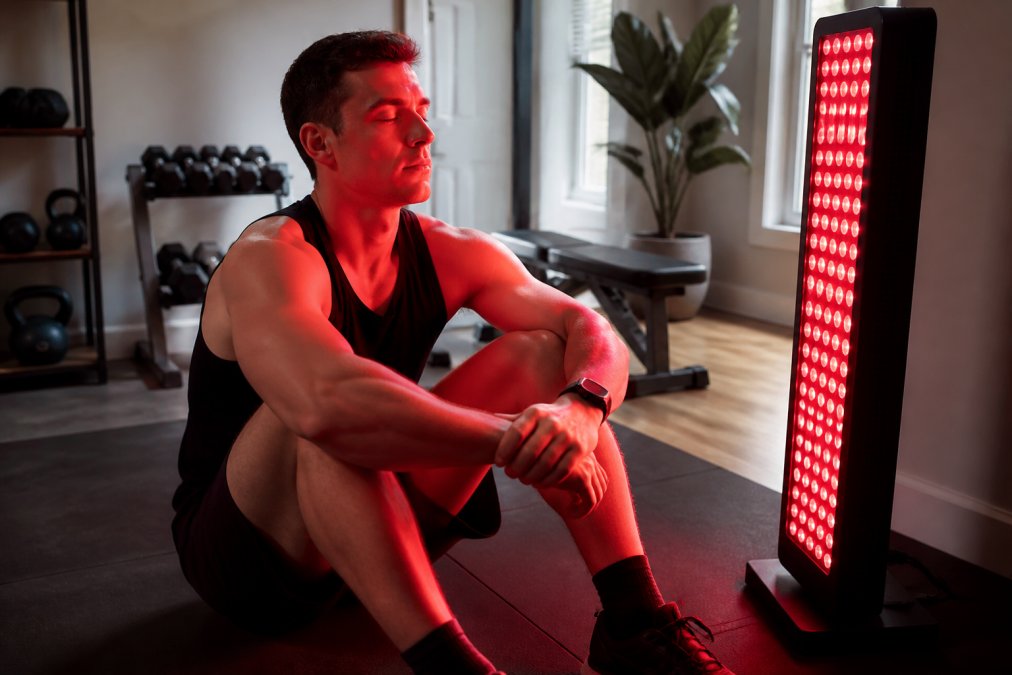
How long to use red light therapy depends on irradiance level, treatment distance, and your specific goal. The target therapeutic dose for most applications is between 10 and 40 J/cm² (peer-reviewed research). At an irradiance of 100 mW/cm², reaching 20 J/cm² takes approximately 3.3 minutes. At 50 mW/cm², the same dose requires about 6.7 minutes. High-irradiance panels are genuinely more efficient.
General session guidelines by goal:
| Goal | Recommended Session Length | Distance from Panel | Frequency |
|---|---|---|---|
| Skin rejuvenation | 10-15 minutes | 6-12 inches | 4-5x per week |
| Muscle recovery | 10-20 minutes | 6-18 inches | Daily or post-training |
| Joint pain relief | 10-20 minutes | 2-6 inches (targeted) | Daily |
| Sleep and relaxation | 10-15 minutes | 12-24 inches | Evening, 4-5x per week |
| General wellness | 10-15 minutes | 12-18 inches | 3-5x per week |
More is not better. Exceeding the therapeutic dose can produce a biphasic response where additional exposure inhibits the cellular benefits you're targeting. Start with shorter sessions and increase gradually.
Integrating Sessions into Your Fitness Routine
The most effective integration point is immediately post-training, during the inflammation window when muscle tissue is most responsive to photobiomodulation. Position a full-body panel in your training space and run a 10-15 minute session within 30 minutes of finishing your workout.
Best Red Light Therapy Panels of 2026: Our Top Picks
Choosing the right panel means matching specifications to your actual goals, not chasing the highest watt count. The seven panels below represent strong options across different use cases.
Best Full-Body Panel: PlatinumLED BioMax 900
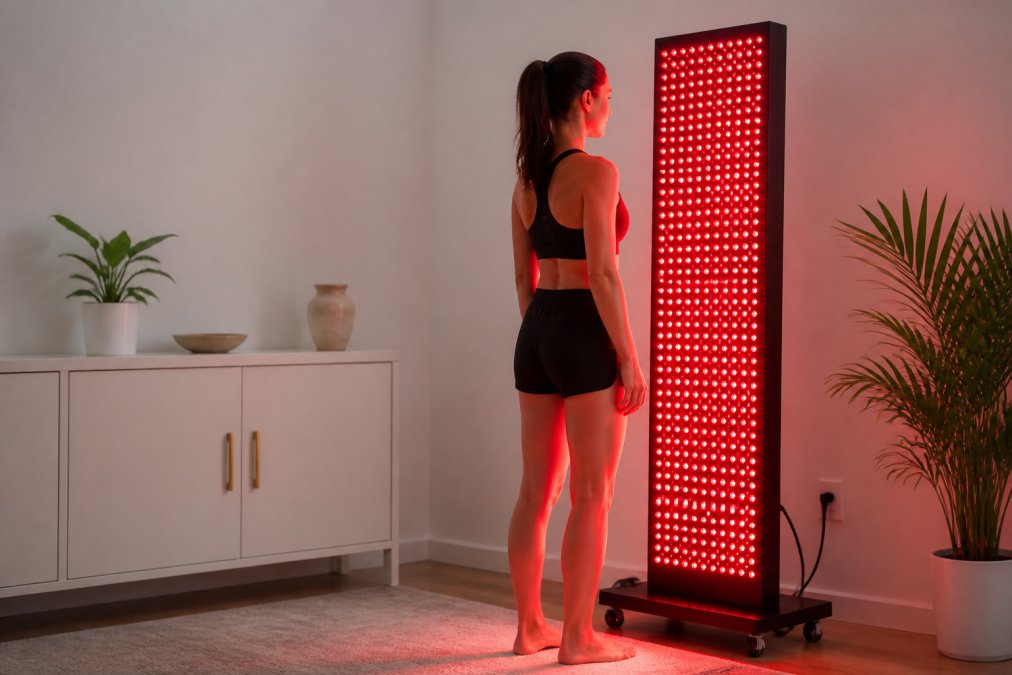
The PlatinumLED BioMax 900 is a technically advanced full-body panel. Seven wavelengths spanning 480nm (blue light for acne) through 1060nm (deep near-infrared) cover applications that would otherwise require multiple devices. The digital touchscreen with optional smartphone app gives independent control over wavelength combinations. The FDA Class II registration reflects a formal regulatory review process.
What works: Industry-leading optical power enables 10-minute full-body sessions rather than 20-minute sessions required by lower-irradiance panels.
What doesn't: At 33 lbs, door hanging is inconvenient.
Best for: Advanced users and athletes building a serious home wellness setup who want the broadest wavelength coverage available.
Best for Smart Features: Joovv Solo 3.0
The Joovv Solo 3.0 is a polished panel in this category. The Recovery+ mode uses pulsed light at 10Hz, a clinically informed feature that some research suggests may enhance photobiomodulation response compared to continuous wave output. Independent control of 660nm red and 850nm near-infrared wavelengths lets you run skin-only or deep tissue-only sessions. Build quality is noticeably premium with medical-grade components and independent safety certification.
Best for: Home users who want a sleek, well-integrated device with smart session tracking and don't need extended wavelength range.
Best Value Full-Body: Mito Red Light MitoPRO 1500+
The MitoPRO 1500+ makes a compelling case that high irradiance and strong value aren't mutually exclusive. Four wavelengths (630nm, 660nm, 830nm, and 850nm) cover the core therapeutic range for both skin-level support and deep tissue penetration. Irradiance exceeds 170 mW/cm², enabling shorter session times. The flicker-free technology and low EMF design address common quality concerns. HSA/FSA eligibility is a practical financial advantage.
Best for: Users who want strong performance across the core wavelength range without paying a premium for extended spectrum or smart features.
Best Entry-Level Option: Hooga HG1500
The Hooga HG1500 is ideal for first-time buyers. At 660nm and 850nm with irradiance exceeding 115 mW/cm² at 6 inches, it delivers the two most important wavelengths at meaningful output. Separate red and near-infrared power switches allow basic customization. Built-in cooling fans prevent overheating during longer sessions. The 3-year warranty and 60-day trial period are buyer-friendly terms at the entry-level price point.
Best for: First-time users, those with a tighter budget, or anyone who wants to validate the therapy before upgrading to a higher-spec panel.
Best for Targeted Joint Relief: Kineon Move+ Pro
The Kineon Move+ Pro combines 660nm LEDs and 808nm near-infrared laser diodes. Medical-grade laser diodes achieve deeper tissue penetration than LEDs alone, which matters for joint structures like cartilage and synovial tissue. The modular three-unit design with a secure strap system allows hands-free use.
Best for: Athletes with recurring joint issues, post-surgical recovery, or anyone needing targeted deep tissue penetration at a specific site.
Best for Precision Control: BioLight ReCharge
The BioLight ReCharge offers a touchscreen, adjustable brightness from 1-100%, and pulse frequency control from 1 to 10,000 Hz. This level of control matters for users experimenting with different pulse protocols or following specific clinical recommendations. The flicker performance (approximately 1.2% modulation at 60 Hz) and documented low EMF emissions make it a safe choice for users with sensitivities.
Best for: Biohackers, practitioners following specific frequency protocols, and users wanting maximum customization for face, joint, and targeted muscle treatment.
Best Zero-EMF Option: SaunaSpace Photon
The SaunaSpace Photon uses near-infrared incandescent bulbs rather than LEDs, producing a broad wavelength range from 650nm to 3000nm with genuine zero EMF exposure and gentle radiant heat. The 10-year warranty is among the longest in this list. The 100-day risk-free trial reflects confidence in the product's longevity.
Best for: EMF-sensitive individuals, those who value a natural light spectrum with heat, and users building a low-tech, low-EMF wellness space.
How to Choose the Right Red Light Therapy Panel
The right panel is determined by three variables: your primary therapeutic goal, the body area you're targeting, and your budget relative to the specifications that matter for your use case.
Start with goal clarity:
- Skin rejuvenation and anti-aging: Prioritize 660nm coverage and irradiance at close range (6-12 inches).
- Full-body muscle recovery: Prioritize panel size, irradiance at 12-18 inches, and combined 660nm/850nm output.
- Joint pain and deep tissue: Prioritize near-infrared wavelengths (850nm+) and consider a targeted wearable.
- Comprehensive wellness: Prioritize multi-wavelength coverage and full-body panel size.
The specification checklist every buyer should run:
- Irradiance stated at a specific distance
- Wavelengths listed in nanometers
- EMF and flicker data available from third-party testing
- FDA clearance or registration documented
- Warranty of at least 2 years
- Return or trial period of at least 30 days
Safety Standards, FDA Clearance, and Warranty
FDA clearance for red light therapy devices is not a single uniform standard. Most LED-based panels are classified as Class II medical devices, requiring 510(k) clearance or registration demonstrating substantial equivalence to a predicate device. Some manufacturers list "FDA registered" rather than "FDA cleared", these are different designations. According to FDA guidance on photobiomodulation devices, Class II device registration involves documented safety testing and manufacturing standards that self-certified products do not undergo.
Warranty terms are a proxy for build confidence. A 1-year warranty on a device priced in the hundreds of dollars is a red flag. The panels in this list carry warranties ranging from 1 year to 10 years, reflecting real differences in component quality and manufacturer confidence.
Choosing a red light therapy panel from a crowded market requires filtering out manufacturer marketing and focusing on the specifications that determine whether a device actually works. Essential Life Vitality's curated collection of red light therapy panels is selected based on verified output specifications, build quality, and documented safety standards, not marketing claims. Every panel in our lineup comes with detailed specifications, free shipping on most continental orders, and a support team available by phone, email, or live chat to help you match the right device to your specific recovery and wellness goals. SHOP NOW
Frequently Asked Questions
What is the best red light therapy panel in 2026?
The best red light therapy panel depends on your goals. For full-body coverage and maximum output, the PlatinumLED BioMax 900 leads with seven wavelengths and clinical-grade irradiance. For smart features and targeted treatment, the Joovv Solo 3.0 stands out. Budget-focused buyers get strong performance from the Hooga HG1500. Athletes with chronic joint issues benefit most from a targeted device like the Kineon Move+ Pro. Match the panel to your specific use case rather than defaulting to the most expensive option.
Are red light therapy panels FDA-cleared for home use?
Some panels carry FDA clearance or registration, which signals they meet specific safety standards. The PlatinumLED BioMax 900, for example, is FDA Class II registered. However, FDA clearance covers device safety, not a guarantee of specific health outcomes. Always verify a panel's regulatory status before purchasing, and check whether it has been independently tested for irradiance, EMF emissions, and flicker to confirm the manufacturer's claims hold up outside their own lab.
What are the primary health benefits of using red light therapy panels?
Red light therapy benefits are driven by photobiomodulation, the process by which specific wavelengths stimulate mitochondrial function and ATP production at the cellular level. Documented applications include skin rejuvenation through collagen synthesis, muscle recovery after intense training, reduction of joint inflammation, and improved sleep quality. Visible red wavelengths around 660nm target surface tissue and skin health, while near-infrared wavelengths around 850nm reach deeper into muscle and joint tissue for recovery and pain management.
How long should I use a red light therapy panel per session?
Most treatment protocols recommend 10 to 20 minutes per session at a distance of 6 to 12 inches from the panel. The therapeutic dose is measured in joules per square centimeter, so higher irradiance panels reach the target dose faster. Starting with shorter sessions of around 10 minutes and building up over the first two weeks reduces the risk of overstimulation. Consistency matters more than session length: daily or near-daily use over 8 to 12 weeks typically produces the most noticeable results.
What irradiance level should I look for in a red light therapy panel?
Irradiance, measured in milliwatts per square centimeter (mW/cm²), determines how quickly a panel delivers a therapeutic dose. At-home panels generally range from around 50 mW/cm² on the lower end to over 170 mW/cm² for high-output clinical-grade devices. Higher irradiance means shorter sessions to hit the same dosage. Look for panels that publish third-party verified irradiance readings at a stated distance, typically 6 inches, rather than relying solely on manufacturer specifications.
This article was written using GrandRanker