

Table of Contents
- Cold Plunge vs Ice Bath: What's Actually Different?
- Cost, Setup, and Maintenance: Side-by-Side Comparison
- Muscle Recovery, Mental Health, and Physiological Benefits
- How Long to Stay in a Cold Plunge (and an Ice Bath)
- Cold Water Immersion Safety: Protocols for Beginners
- Best Portable Cold Plunge Systems for Home Use
- Cold Plunge vs Ice Bath: Which One Should You Choose?
- Frequently Asked Questions
Last Updated: August 31, 2026
Cold Plunge vs Ice Bath: What's Actually Different?
The cold plunge vs ice bath debate matters because the choice directly affects your results, budget, and consistency. Both methods use cold water immersion to trigger vasoconstriction, reduced inflammation, and dopamine release. The real differences lie in temperature control, cost, and long-term usability.

These are genuinely different recovery tools with different trade-offs. Below, we break down exactly where each method wins and which one belongs in your home wellness setup.
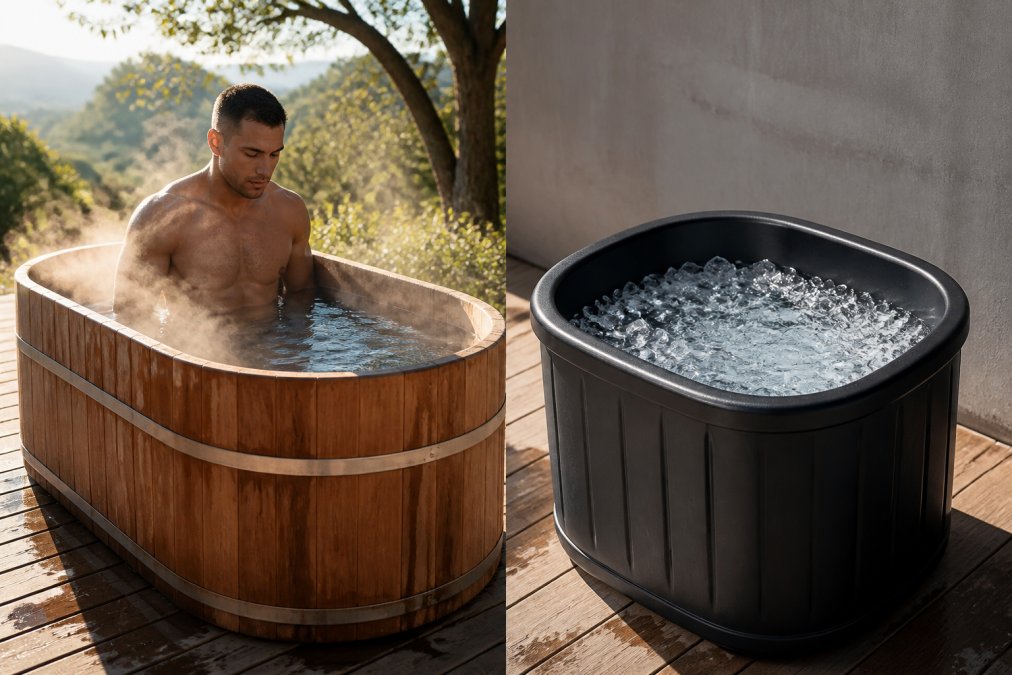
Defining Each Method
A cold plunge is a dedicated immersion vessel equipped with a chiller unit that mechanically maintains water temperature without ice. Modern systems include built-in filtration, temperature controls, and often smartphone connectivity. You set your target temperature once and the system holds it indefinitely.
An ice bath is a standard tub or large container filled with cold water and ice cubes. No mechanical cooling, no filtration system, no thermal regulation between sessions. You buy ice, add it to water, and immerse yourself before it melts.
Temperature Range Comparison
A quality chiller unit holds water at a precise target, commonly between 39°F and 55°F (4°C to 13°C), session after session. The Icetubs IceBarrel XL cools to a minimum of 37.4°F (3°C) and holds that temperature reliably.
An ice bath depends on ambient temperature, ice density, and how much ice you add. Water temperature can shift several degrees during a single session as ice melts. On a warm day, maintaining sub-50°F water requires significant ice and constant monitoring. That variability undermines the consistent temperature stimulus that drives physiological adaptation.
| Feature | Cold Plunge System | Ice Bath (DIY) |
|---|---|---|
| Temperature control | Precise, mechanical | Approximate, ice-dependent |
| Minimum temp achievable | ~37°F (chiller-dependent) | ~34°F (with large ice volume) |
| Consistency session to session | High | Low to moderate |
| Ambient temperature sensitivity | Minimal | High |
| Setup time per session | Under 5 minutes | 15-30 minutes (ice sourcing) |
| Ongoing filtration | Built-in | None (water changes required) |
| Upfront cost | $999 - $12,599+ | $50 - $300 (vessel + ice costs) |
Cost, Setup, and Maintenance: Side-by-Side Comparison
Upfront price favors the ice bath, but the real cost comparison differs once you account for ongoing expenses over 12 months.
Upfront and Ongoing Costs
A DIY ice bath starts cheap: a suitable tub runs $50 to $300. The ongoing cost is ice. A serious cold therapy routine can consume significant ice per week, and that cost compounds quickly.
Cold plunge systems carry higher upfront costs, but ongoing expenses are primarily electricity. The FCP Premium 2XL 148 Gal Cold Plunge Tub Kit starts at $999.97, and the FCP Premium XL 120 Gal with a 1HP chiller is $1,999.97, both including the chiller, filter, and pump. The Icetubs IceBath starts at $12,099.97, and the Icetubs IceBarrel XL at $12,599.97, representing the premium end with Thermowood construction and advanced filtration.

Maintenance and Water Filtration
Without a filtration system, ice bath water degrades quickly. Bacteria, skin cells, and debris accumulate with each use, requiring frequent full water changes. For daily users, this means regular hauling and refilling.
Cold plunge systems with integrated filtration handle this automatically. The FCP Premium XL uses a built-in filter that traps debris and circulates water continuously. The Icetubs systems include a three-stage filtration system with a built-in ozonator that refreshes water without harsh chemicals.
The practical result: a filtered cold plunge requires a quick filter rinse or cartridge change every one to two weeks. An ice bath requires full water changes after every few sessions. Over a year, that maintenance difference is substantial.
Muscle Recovery, Mental Health, and Physiological Benefits
Cold water immersion works through vasoconstriction in peripheral blood vessels, which reduces blood flow to muscles and limits the inflammatory response following intense exercise. When you exit the water, vasodilation occurs and fresh, oxygenated blood rushes back through tissue.
As documented in research published by the National Institutes of Health on cold water immersion and exercise recovery, consistent cold exposure after training can reduce delayed onset muscle soreness and support faster return to performance. The keyword is "consistent." An ice bath with variable temperature delivers an inconsistent cold shock response. A chiller-maintained cold plunge delivers the same thermal stimulus every session, driving physiological adaptation.
Cold exposure triggers a significant release of dopamine and norepinephrine, neurochemicals associated with mood, focus, and motivation. Stepping into cold water voluntarily builds mental resilience: the practiced ability to act despite resistance. That carries over to other stressors.
The ice bath delivers this benefit too, but the friction of setup and inconsistent temperature makes it harder to build the daily habit that compounds these effects. Research consistently shows that frequency matters more than any single session. A cold plunge system that's always ready removes the barriers that break habits.
How Long to Stay in a Cold Plunge (and an Ice Bath)
The recommended immersion time is 2 to 10 minutes per session, depending on water temperature and experience level (heart.org). Colder water requires shorter sessions; warmer cold water (around 55°F) tolerates longer immersion.
For beginners, start at 2 to 3 minutes at 55°F to 60°F. As your body adapts over weeks, you can gradually extend duration or reduce temperature. Most experienced users settle into 5 to 8 minutes at 45°F to 55°F.
Because ice bath temperature drifts upward as ice melts, your effective cold stimulus may decrease during longer sessions. A 10-minute ice bath starting at 50°F and ending at 58°F delivers less total cold exposure than a 10-minute cold plunge held at a consistent 50°F.
| Experience Level | Target Temp | Recommended Duration | Frequency |
|---|---|---|---|
| Beginner | 55-60°F | 2-3 minutes | 3x per week |
| Intermediate | 50-55°F | 4-6 minutes | 4-5x per week |
| Advanced | 45-50°F | 6-10 minutes | Daily |
| Elite/Adapted | 39-45°F | 5-8 minutes | Daily |
Cold Water Immersion Safety: Protocols for Beginners
Cold water immersion is safe for healthy adults when approached with appropriate caution. The cold shock response, the sharp gasp reflex and cardiovascular spike in the first 30 to 60 seconds, is the primary risk for new users.
The American Heart Association's guidance on cold water immersion and cardiovascular response recommends that individuals with known cardiovascular conditions, hypertension, or Raynaud's disease consult a physician before beginning cold water immersion therapy.
Beginner safety protocols:
- Start with water at 60°F or warmer for your first two to three sessions
- Never immerse alone; have someone nearby for your first several sessions
- Control your breathing before entry; do not enter while hyperventilating
- Focus on slow, controlled exhales during the first 30 seconds to manage the cold shock response
- Exit the water if you feel chest tightness, dizziness, or numbness beyond expected cold sensation
- Warm up passively after immersion; avoid hot showers immediately after
- Avoid cold plunging within 30 minutes of intense cardiovascular exercise until adapted
- Do not consume alcohol before cold water immersion
Thermal regulation improves significantly with consistent practice. Most users find the cold shock response diminishes noticeably within two to three weeks of regular sessions.
Best Portable Cold Plunge Systems for Home Use
Portable cold plunge systems have closed the gap between DIY ice baths and fixed installations. For home users who want consistent cold therapy without permanent outdoor installation, a portable system with an integrated chiller is the practical answer.
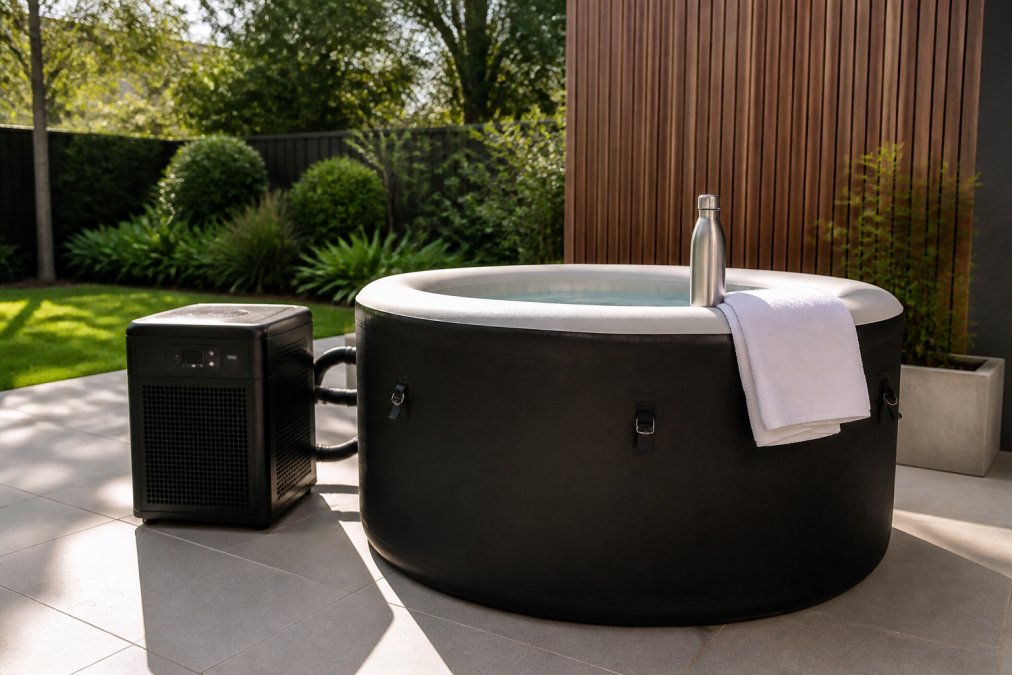
Essential Life Vitality carries several options covering the full range of home use cases:
FCP Premium 2XL 148 Gal Cold Plunge Tub Kit with 1/3 HP Chiller ($999.97) is the entry point for a complete chiller-based system. The 148-gallon oval design accommodates full-body immersion comfortably, with 7-layer reinforced insulation retaining cold temperatures without constant chiller cycling. This is the right starting point for most home users.
FCP Premium XL 120 Gal with 1/3 HP Chiller ($1,099.97) offers a more compact footprint with the same filtration and chiller setup. The inflatable design deflates for storage and includes a travel bag, making it genuinely portable.
FCP Premium XL 120 Gal with 1HP Chiller ($1,999.97) steps up to a more powerful chiller that reaches and holds lower temperatures faster, relevant if you're targeting 45°F to 50°F consistently or live in a warm climate.

Icetubs IceBath Thermowood and Stainless Steel ($12,099.97) and Icetubs IceBarrel XL Thermowood and Fiberglass ($12,599.97) represent the premium tier: permanent-quality construction with three-stage filtration, ozonator, smartphone temperature control, and range from 37.4°F to 100.4°F. These function as both cold plunge and warm soak, making them the centerpiece of a complete home wellness setup.
Cold Plunge vs Ice Bath: Which One Should You Choose?
The decision comes down to three factors: how seriously you take cold therapy, how often you plan to use it, and whether consistency matters to you.
Choose an ice bath if:
- You want to test cold therapy before committing to a system
- Your sessions will be infrequent (once or twice per week)
- Budget is the primary constraint and you're willing to manage ice logistics
- You have access to a reliable, affordable ice source
Choose a cold plunge system if:
- Cold therapy is a core part of your recovery protocol
- You want consistent temperature for repeatable physiological results
- You value low-maintenance operation with no ice runs or frequent water changes
- You're building a home wellness routine you plan to maintain long-term
If you're serious enough about recovery to research cold plunge vs ice bath options, you're serious enough to benefit from a dedicated system. The ice bath is a starting point. The cold plunge is the actual tool.
For home use, the FCP Premium 2XL at $999.97 offers the lowest entry point into a complete, chiller-based cold plunge system with real filtration and consistent temperature control. For those building a premium home wellness sanctuary, the Icetubs systems deliver an experience that matches dedicated cold therapy facilities.
Frequently Asked Questions
What is the difference between a DIY ice bath and a dedicated cold plunge system?
A DIY ice bath uses a bathtub or stock tank filled with tap water and bags of ice, giving you one-time cold exposure with no temperature control. A dedicated cold plunge system includes a chiller unit that maintains a precise, consistent temperature session after session. The practical difference is repeatability: a chiller holds your target temperature without any ice purchases, while a DIY setup varies based on ambient temperature and ice cube density, making it harder to build a reliable recovery protocol.
How cold should an ice bath be for muscle recovery?
Most recovery protocols target water temperatures between 50°F and 59°F (10°C to 15°C) for cold water immersion. This range triggers vasoconstriction and reduces inflammation without the cardiovascular stress of extremely cold water. Dedicated cold plunge systems, such as the FCP and Icetubs units, can cool to as low as 37.4°F (3°C), giving you the flexibility to start warmer and gradually lower the temperature as your body adapts over weeks of regular cold exposure.
How long should you stay in a cold plunge or ice bath?
Beginners should start with 1 to 2 minutes and build gradually toward 5 to 10 minutes per session. Most cold therapy research supports sessions in the 3- to 10-minute range for post-workout recovery benefits. Staying beyond 15 minutes in very cold water increases the risk of hypothermia and is not recommended. A 3-minute session at 50°F to 59°F is enough to trigger the cold shock response and support inflammation reduction without overexposure.
Is there a downside to cold plunge therapy?
Cold plunge therapy carries real risks if done incorrectly. The cold shock response can spike heart rate and blood pressure sharply in the first 30 to 60 seconds, which poses a risk for people with cardiovascular conditions. Prolonged submersion can lead to hypothermia. Some research also suggests that cold water immersion immediately after strength training may blunt long-term muscle adaptation if done too frequently. Always consult a physician before starting a cold therapy routine, especially if you have heart disease, Raynaud's syndrome, or high blood pressure.
What are the environmental and energy costs of running a cold plunge chiller?
A home cold plunge chiller typically draws between 500 and 1,500 watts depending on horsepower. Running a 1/3 HP unit for two to four hours daily adds roughly 1 to 3 kWh per day to your electricity bill, which translates to a modest monthly cost depending on your local utility rate. Insulated tubs and insulated covers significantly reduce how long the chiller needs to run to maintain your target temperature, cutting both energy consumption and operating costs over time.
Cold therapy works. The method you choose determines whether it works consistently enough to matter. Essential Life Vitality's cold plunge collection covers every level of commitment, from portable inflatable systems to premium Thermowood installations, with free shipping on most orders within the continental U.S. and a support team available by phone, email, or live chat. Browse the full cold plunge range and find the system that fits your recovery goals.
This article was written using GrandRanker