

Table of Contents
- Why Your Home Recovery Sanctuary Matters
- Setting the Tone With Color and Ambient Lighting
- Infrared Sauna vs Cold Plunge for Recovery
- Benefits of Red Light Therapy at Home
- How to Set Up a Home Wellness Room
- Sensory Comfort: Textures, Scent, and Soundproofing
- Personalizing Your Space and Building a Wellness Routine
- Frequently Asked Questions
Last Updated: September 1, 2026
Why Your Home Recovery Sanctuary Matters
Your body recovers best in an environment designed for healing. A home recovery sanctuary isn't a luxury, it's a functional space that removes barriers to consistent self-care. When you control your environment, you control your recovery outcomes.
Most people treat recovery as something that happens between workouts or after illness. But recovery is active. It requires intention, consistency, and the right conditions. Without them, you're fighting against your own space.
This guide walks you through creating a home recovery sanctuary that actually supports your healing, whether you're recovering from surgery, managing chronic pain, bouncing back from intense training, or simply building a space for daily stress relief. We'll cover the specific design elements that work, the technology that makes a difference, and how to personalize it for your life.
Setting the Tone With Color and Ambient Lighting
Color and light shape how your nervous system responds to a space. Warm, dim lighting triggers relaxation. Cool, bright light signals alertness. For a recovery space, you want the former.
Start with your color palette. Deep blues, soft greens, warm grays, and muted earth tones create a calming foundation. These colors activate the parasympathetic nervous system, the part responsible for rest and healing. Avoid bright whites and high-contrast patterns; they overstimulate.
Lighting is where most people go wrong. They use whatever fixture came with the house. Instead, layer your lighting:
- Ambient lighting: Soft, diffused light as your baseline. Dimmable overhead fixtures or wall sconces work well.
- Task lighting: Focused light for reading or mobility without harsh shadows.
- Accent lighting: Warm-toned lamps or LED strips that create visual interest without glare.
Consider circadian rhythm compatibility. Warmer color temperatures (2700K or lower) support evening recovery. If you use your space in the morning, slightly cooler tones (3000-4000K) won't disrupt your sleep later. The key is control, install dimmer switches and use bulbs you can adjust.
Natural light matters too. If your recovery space has windows, use sheer curtains to diffuse direct sunlight. Natural light supports mood and vitamin D synthesis, but unfiltered sun can create visual strain during relaxation.
Infrared Sauna vs Cold Plunge for Recovery
These two modalities represent opposite ends of the recovery spectrum, yet both serve distinct purposes. Understanding when to use each transforms your results.
An infrared sauna uses radiant heat to penetrate tissue without overheating the air around you. This triggers vasodilation, blood vessels expand, improving circulation and nutrient delivery to muscles. The experience feels gentler than traditional saunas because the air temperature stays moderate while your core temperature rises.
A cold plunge exposes your body to 50-60°F water, activating the parasympathetic nervous system through controlled stress. This triggers vasoconstriction followed by vasodilation, improving circulation and potentially reducing inflammation. The shock also activates brown adipose tissue, which burns calories and supports metabolic health.
The choice depends on your recovery goal:
- Use infrared sauna for: muscle soreness, joint stiffness, relaxation, circulation improvement, detoxification support
- Use cold plunge for: post-workout inflammation reduction, nervous system resilience, mental clarity, metabolic activation
Many serious recovery practitioners use both, sauna for relaxation and deep tissue recovery, cold plunge for acute inflammation management. If you're choosing one, start with the infrared sauna. It's more accessible, feels more comfortable initially, and delivers broader benefits for general wellness.
The American College of Sports Medicine provides evidence-based guidance on recovery modalities and their applications for different fitness levels and recovery goals.
Benefits of Red Light Therapy at Home
Red light therapy (wavelengths 600-700nm) penetrates tissue and stimulates mitochondrial function. This increases ATP production, the energy currency your cells use for repair and recovery.
The benefits are specific and measurable:
- Muscle recovery: Reduced soreness, faster strength gains after training
- Joint health: Decreased inflammation, improved mobility
- Skin healing: Accelerated wound closure, collagen production
- Circulation: Improved blood flow, better nutrient delivery
- Sleep quality: Evening red light exposure supports melatonin production without the disruption of blue light
Red light works best when used consistently. A 10-15 minute session 4-5 times per week delivers better results than sporadic use. Placement matters, position the panel 6-12 inches from the area you're targeting.
Research from the National Center for Biotechnology Information documents red light therapy's effects on muscle recovery and mitochondrial function, with studies showing measurable improvements in ATP production and reduced muscle soreness markers.
Many people combine red light with other recovery modalities. Use it during meditation, while reading, or immediately after workouts. The Photobiomodulation Society maintains current research on optimal wavelengths and exposure times for specific applications.
How to Set Up a Home Wellness Room
Creating a functional home wellness room requires thoughtful planning. You're not decorating, you're building a recovery system.
Start by assessing your space. A dedicated room is ideal, but a corner of a bedroom, basement, or garage works. You need:
- Minimum 8x8 feet for comfortable movement and equipment placement
- Climate control: Temperature regulation between 65-75°F
- Flooring: Non-slip, easy to clean (cork, rubber, or sealed concrete)
- Electrical capacity: Dedicated circuits for high-power equipment like infrared saunas
- Ventilation: Fresh air circulation to manage humidity and air quality
Creating Dedicated Recovery Zones
Divide your space into functional zones rather than mixing everything together. This creates psychological boundaries and prevents the space from feeling cluttered.
Zone 1: Heat therapy area, Where your infrared sauna or heat lamp lives. Keep this separate from relaxation zones to maintain clear-cut recovery phases.
Zone 2: Cold therapy area, If using a cold plunge, position it away from heat equipment. The contrast matters psychologically and physically.

Zone 3: Meditation and stretching, Open floor space with cushions or a yoga mat. This is your parasympathetic activation zone, keep it minimal and uncluttered.
Zone 4: Light therapy station, Where you'll use red light therapy panels. Position near a comfortable chair or treatment table.
The International Association of Wellness Professionals recommends zone-based design for home wellness spaces to improve consistency and reduce decision fatigue.
Each zone should have its own lighting, temperature comfort, and sensory profile. Moving between zones signals to your body that you're shifting recovery modes.
Incorporating Natural Elements and Biophilic Design
Biophilic design, incorporating natural elements into built spaces, reduces stress and accelerates recovery. Your body responds to nature even in small doses.
Add living plants throughout your space. They improve air quality, reduce cortisol levels, and create visual softness. Low-maintenance options include pothos, snake plants, and peace lilies. Position them at eye level or slightly above to maximize their visual and psychological impact.
Use natural materials wherever possible. Wood, stone, cork, and wool create tactile comfort that synthetics can't match. A wooden sauna beats a plastic one not just functionally but psychologically. Your nervous system recognizes natural materials as safe.
Water elements, a small fountain, water feature, or even the sound of water through a speaker, activate the parasympathetic nervous system. The sound of flowing water is one of the most reliable stress-reduction triggers available.
Natural light through windows (with diffusion) connects you to circadian rhythms. If your space lacks windows, consider full-spectrum lighting that mimics natural daylight patterns.
Organizing With Intention and Hidden Storage
Clutter sabotages recovery. Visual disorder triggers low-level stress that undermines your entire wellness routine.
Invest in closed storage for equipment, supplements, and accessories. Shelving units with doors, storage benches, or built-in cabinets keep your space visually clean. Everything should have a designated home, no piles, no "temporary" stacks.
Label storage clearly. When you're tired or sore, you need to know exactly where things are. Clear containers with labels beat mystery boxes every time.
Cables and cords are the enemy of a calm space. Use cable management systems, run wires behind baseboards, or use cord covers. Your brain processes visual chaos as a threat, even subconsciously.
Create a simple inventory system for consumables like essential oils, recovery supplements, or sauna accessories. Nothing kills a wellness routine faster than running out of supplies mid-session.
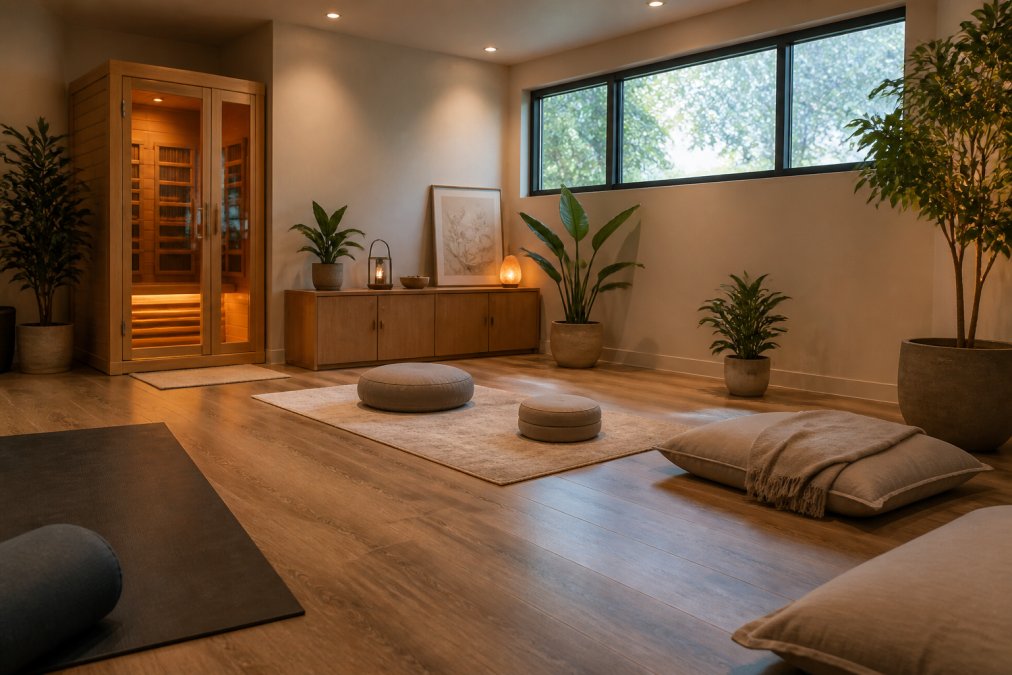
Sensory Comfort: Textures, Scent, and Soundproofing
Recovery happens through all five senses. Neglect any one, and your space loses power.
Textures matter more than most people realize. Soft furnishings, plush blankets, cushioned seating, wool rugs, activate the parasympathetic nervous system through touch. Rough or synthetic textures create subtle tension. Choose organic materials: cotton, linen, wool, cork. Your skin knows the difference.
Scent is the fastest pathway to the limbic system, which controls emotion and memory. Lavender, eucalyptus, and cedarwood are recovery-specific scents backed by consistent preference. Use essential oil diffusers rather than sprays, diffusers create sustained, subtle presence without overwhelming the space.
Sound is where most home recovery spaces fail. Ambient noise from outside, traffic, neighbors, HVAC systems, creates constant low-level stress. Soundproofing doesn't require expensive construction.
Start with soft furnishings, which absorb sound naturally. Thick curtains, rugs, and upholstered furniture reduce echo and external noise. Add acoustic panels to walls if you have significant external noise. A white noise machine or nature sounds app masks disruptive frequencies without requiring permanent installation.
Many people overlook air quality. Stale air triggers subtle anxiety. Use an air purifier with HEPA and activated charcoal filtration. Your recovery space should smell fresh and feel breathable.
Personalizing Your Space and Building a Wellness Routine
A recovery sanctuary only works if you actually use it. Personalization is what converts a nice room into a consistent habit.
Display items that matter to you, photos, artwork, objects that remind you why recovery matters. A photo of yourself healthy and strong. A reminder of a goal you're working toward. These aren't decorative; they're motivational anchors.
Build a simple routine that anchors your space use. The routine matters more than the specific activities. Consistency signals to your body that this space means recovery.
A basic routine might look like:
- Warm-up (5 min): Gentle stretching or breathing work
- Primary modality (15-20 min): Infrared sauna, red light therapy, or meditation
- Cool-down (5-10 min): Stretching, journaling, or gentle movement
- Integration (5 min): Hydration, reflection, transition back to normal activity
The key is beginning the same way each time. Your nervous system learns that this specific sequence means recovery. After a few weeks, simply entering the space triggers a relaxation response.
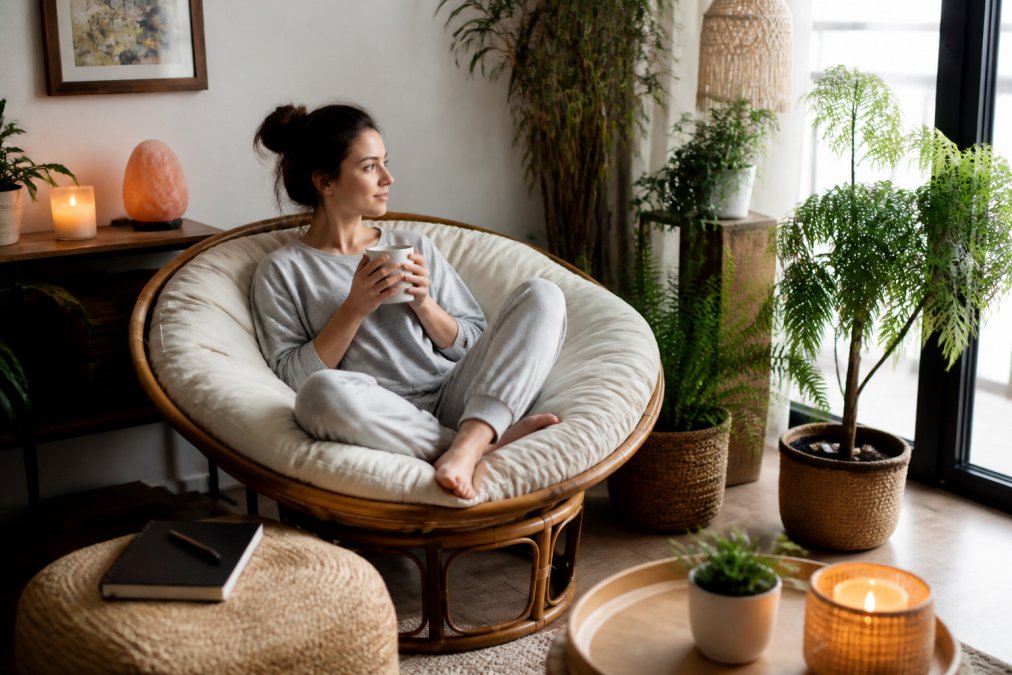
Track your sessions simply, a calendar marking days you used the space. This creates accountability without obsession. You're aiming for consistency, not perfection.
Essential Life Vitality's home wellness product collection includes infrared saunas like the Pandora Premium 2-Person Indoor Infrared Sauna and the RED Light PEMF Infrared Heating Wellness Mat PRO, designed to integrate seamlessly into personalized recovery routines. These tools accelerate the benefits of your space by providing evidence-based recovery modalities you can use daily.

Start small. A single quality piece of equipment beats a room full of gadgets you never use. Master one modality, whether that's sauna use, red light therapy, or meditation, before adding complexity. Your space will evolve as your needs change.
Frequently Asked Questions
Q: What are the essential elements of a home recovery sanctuary design?
A: A functional home recovery sanctuary combines intentional lighting (warm, dimmable options), calming colors (soft greens, blues, earth tones), natural elements like plants or wood, comfortable seating, and recovery equipment suited to your needs. Add hidden storage to maintain a clutter-free environment, incorporate soft textures through rugs and cushions, and consider acoustic comfort by minimizing outside noise. Personal touches like meaningful artwork or meditation nooks make the space feel restorative rather than clinical.
Q: How does infrared sauna therapy fit into a home recovery sanctuary?
A: An infrared sauna serves as a centerpiece for your home recovery sanctuary, promoting muscle relaxation and stress reduction through gentle heat therapy. The Pandora Premium 2-Person Indoor Infrared Sauna with red light therapy integrates both heat and light-based recovery in one space, making it ideal for daily wellness routines. Position it in a dedicated zone with ambient lighting and ensure proper ventilation. Many users find scheduling regular sauna sessions creates structure and discipline in their recovery practice, supporting both physical and mental restoration.
Q: Can I create a recovery sanctuary in a small apartment or rental?
A: Absolutely. Start with portable, space-efficient tools like the RED Light PEMF Infrared Heating Wellness Mat PRO, which stores easily and works in any room. Use vertical storage for items like yoga mats and recovery tools. Renters can enhance their space with removable elements: adhesive wall art, temporary lighting fixtures, and freestanding furniture. Focus on sensory elements that don't require permanent changes, soft throw blankets, essential oil diffusers, and area rugs create a sanctuary feel without altering the space. Even a corner with a comfortable chair, plants, and warm lighting becomes a restorative zone.
Q: What role does lighting play in a recovery-focused home design?
A: Lighting directly influences your circadian rhythm and recovery capacity. Warm, dimmable lighting (2700K color temperature) supports relaxation and melatonin production, while red light therapy panels promote cellular recovery and reduce inflammation. Layer your lighting: overhead dimmers for flexibility, task lighting near reading or meditation areas, and accent lighting to highlight natural elements. Avoid harsh fluorescent light and blue-spectrum lighting in evening hours. The Pandora Premium Sauna includes mood lighting features that enhance the sensory experience and support your body's natural recovery processes.
Building a home recovery sanctuary is an investment in your body's ability to heal. It removes friction from recovery, makes consistency easy, and creates a dedicated space where your nervous system knows it's safe to rest. Start with the fundamentals, color, light, organization, then add the modalities that match your recovery goals. The best recovery sanctuary is the one you'll actually use, every single day.
This article was written using GrandRanker