

Table of Contents
- Infrared Sauna vs Traditional Sauna: Quick Comparison Table
- How Each Sauna Type Generates Heat
- Infrared Sauna Health Benefits vs Traditional Sauna Outcomes
- Sauna Session Duration, Temperature, and the User Experience
- Home Sauna Installation Requirements and Long-Term Costs
- Safety Considerations, EMF, and Environmental Impact
- Which Sauna Should You Choose?
- Conclusion
Last Updated: August 29, 2026
Choosing between an infrared sauna and a traditional sauna is one of the most consequential decisions you'll make when building a home wellness setup. At Essential Life Vitality, we've worked through the real differences so you don't have to rely on marketing copy to make the call. The two technologies heat your body in fundamentally different ways, produce different physiological responses, and suit different users.
The short answer: infrared saunas are better for most home users because they run cooler, heat faster, cost less to operate, and fit easily into standard rooms. Traditional saunas deliver a more intense thermal experience that many enthusiasts find irreplaceable. The right choice depends on your health goals, available space, and how you actually want to feel inside the cabinet.
Infrared Sauna vs Traditional Sauna: Quick Comparison Table
| Feature | Infrared Sauna | Traditional Sauna | Winner |
|---|---|---|---|
| Operating temperature | 113-149°F | 160-195°F | Infrared (gentler) |
| Preheating time | 10-15 minutes | 30-60 minutes | Infrared |
| Humidity level | Dry (under 10% RH) | Variable (up to 30-40% with löyly) | Traditional (steam ritual) |
| Heat source | Far-infrared / full-spectrum panels | Electric heater or wood-burning stove | |
| Electrical requirement | 120V standard outlet | 240V dedicated circuit | Infrared |
| Typical wattage | 1,600-2,000W | 4,000-8,000W | Infrared |
| EMF concern | Low EMF models available | None (no panels) | Traditional |
| Installation complexity | Low (plug-and-play) | High (ventilation, wiring) | Infrared |
| Sensory experience | Gentle, radiant warmth | Intense ambient heat, steam option | Traditional (immersive) |
| Best for | Home use, daily sessions | Enthusiasts, gym-style experience | Depends on user |
How Each Sauna Type Generates Heat
The fundamental difference between these two sauna types comes down to physics, and that physics changes everything about how your body responds.
Radiant Heat from Infrared Panels
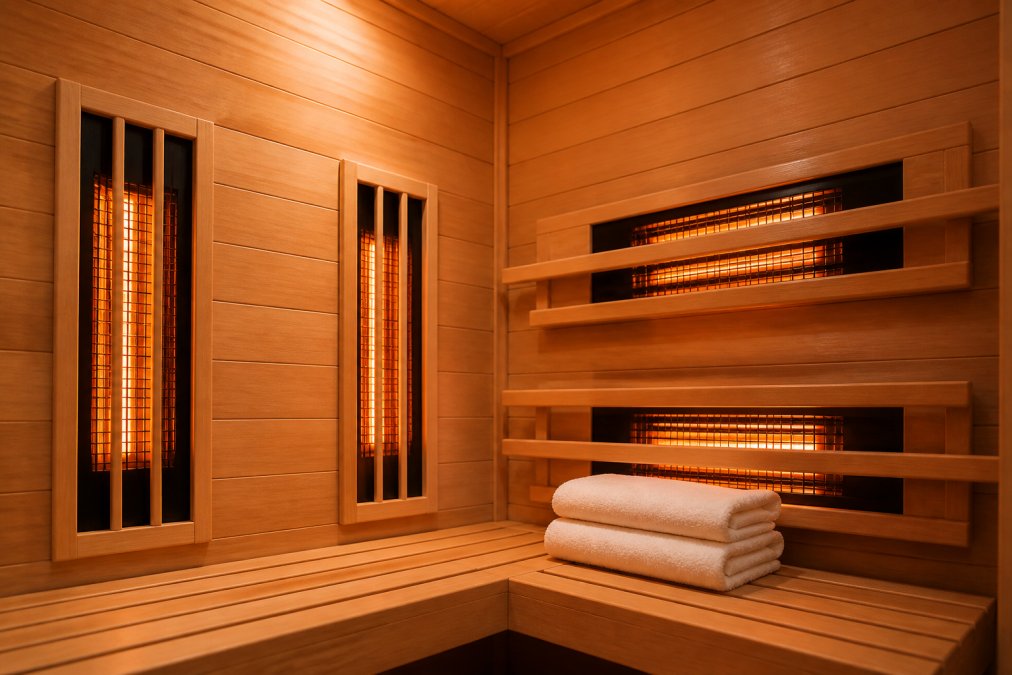
An infrared sauna heats your body directly using radiant heat emitted by ceramic panels or carbon heaters mounted on the cabin walls. The panels emit far-infrared wavelengths that penetrate several centimeters into muscle tissue without significantly heating the surrounding air. Your core body temperature rises from the inside out. Full-spectrum models add near-infrared and mid-infrared wavelengths to vary tissue penetration depth. Because ambient temperature stays relatively low, typically 113-149°F, most users can sustain 20-40 minute sessions comfortably.

Ambient Heat from Electric Heaters and Löyly Steam
A traditional sauna heats the air inside the cabin to 160-195°F using an electric heater or wood-burning stove. Your body absorbs that ambient heat passively, the way you would feel heat standing near a bonfire. The thermal stress is higher, and the cardiovascular response is correspondingly more intense.
The löyly ritual, the practice of pouring water over hot sauna stones to generate bursts of steam, is unique to traditional sauna bathing. According to the Finnish Sauna Society's documentation on traditional sauna practice, the steam ritual is considered inseparable from authentic sauna bathing. That sensory dimension simply does not exist in an infrared cabin.
Infrared Sauna Health Benefits vs Traditional Sauna Outcomes
Both sauna types produce genuine therapeutic benefits, though the mechanisms differ.
Cardiovascular Health and Vasodilation
Sauna bathing of either type triggers vasodilation, the widening of blood vessels in response to heat. Blood flow increases, heart rate rises, and the cardiovascular system responds similarly to moderate aerobic exercise. Research published through the National Institutes of Health on sauna cardiovascular effects indicates that regular sauna use is associated with improved cardiovascular health markers.
Traditional saunas produce more acute cardiovascular stress because of the higher ambient temperature. For healthy individuals who enjoy intensity, that's a feature. For people with cardiovascular sensitivities, the lower operating temperature of an infrared sauna makes it the more accessible option.
Muscle Recovery, Detoxification, and Sweat Production
The infrared sauna's advantage for muscle recovery comes from the depth of radiant heat penetration. Far-infrared wavelengths reach muscle tissue directly, promoting blood flow to fatigued areas and potentially reducing delayed onset muscle soreness more efficiently than surface-level ambient heat. Athletes using infrared sessions post-training typically report faster recovery windows.
Sweat production in an infrared sauna is substantial despite the lower temperature, because the body responds to internal tissue warming. Traditional saunas, especially with löyly steam, produce higher sweat volumes in shorter sessions due to combined high ambient temperature and elevated humidity.
Detoxification claims deserve nuance. Both sauna types promote sweating, and sweat contains trace amounts of certain compounds. The body's primary detoxification organs remain the liver and kidneys, so the sauna's contribution is supplementary. That said, the relaxation response, reduced cortisol, and improved circulation support overall metabolic health.
Specific Health Condition Protocols
For people with chronic muscle soreness or joint stiffness, far-infrared sessions at 113-130°F for 20-30 minutes offer a low-impact, daily-use protocol that doesn't demand the heat tolerance of a traditional sauna. The Thermora Pandora combines far-infrared panels with red light therapy and Himalayan salt rock panels for therapeutic daily use.

For individuals managing stress-related conditions, the lower thermal stress of infrared allows longer, more meditative sessions. The combination of radiant heat and chromotherapy lighting supports a parasympathetic nervous system response that many users find more sustainable than intense traditional sauna heat.
Traditional saunas suit users who want acute cardiovascular conditioning or high-heat thermal stress. As documented in Mayo Clinic guidance on sauna safety, people with uncontrolled hypertension or recent cardiac events should get medical clearance before beginning sauna bathing.
Sauna Session Duration, Temperature, and the User Experience
Sauna session duration recommendations differ significantly between the two types, and the user experience inside each cabinet is genuinely different.

An infrared sauna session typically runs 20-45 minutes at 113-149°F. The Thermora Valen recommends 15-20 minute sessions in summer and 25-30 minutes in winter. First-time users often start at 20 minutes and build tolerance over two to three weeks.
A traditional sauna session runs 8-15 minutes per round at 160-195°F, with cool-down breaks between rounds. The full ritual, including cool-down periods and rest, can last 60-90 minutes total.
The sensory profiles are genuinely distinct:
- Infrared: Gentle, enveloping warmth that builds gradually. Lower humidity means dry skin and easy breathing. Many users read, meditate, or listen to music. The Thermora Valen includes Bluetooth speakers and chromotherapy lighting to support extended, low-intensity sessions.
- Traditional: Immediate, aggressive heat that commands your full attention. With löyly steam, the air feels alive. The experience is more physically intense and more socially rooted in sauna etiquette traditions.
For daily home use, most people find the infrared format more sustainable. The 10-minute preheat time means a spontaneous evening session is practical in a way that a 45-minute preheating traditional sauna simply isn't.
| Metric | Infrared Sauna | Traditional Sauna |
|---|---|---|
| Session temperature | 113-149°F | 160-195°F |
| Session duration | 20-45 minutes | 8-15 min per round |
| Preheat time | 10-15 minutes | 30-60 minutes |
| Humidity | Dry | Dry to high (with löyly) |
| Typical weekly frequency | Daily use sustainable | 2-4 sessions per week |
Home Sauna Installation Requirements and Long-Term Costs
Home sauna installation is where the two types diverge most sharply for practical buyers.
Electrical and Space Requirements
Most home infrared saunas plug into a standard 120V outlet with a 15-20 amp dedicated breaker. Assembly takes approximately one hour on any flat, non-carpeted indoor surface.
Traditional saunas require a dedicated 240V circuit, which means a licensed electrician, permit work in most jurisdictions, and potentially a panel upgrade. Wood-burning units require a flue and proper ventilation, adding construction scope. Installation costs for a traditional sauna commonly run into thousands of dollars in labor and electrical work alone.
Energy Consumption and Maintenance Costs Over Time
An infrared sauna drawing 1,600-2,000 watts for 30 minutes per session consumes roughly 0.8-1.0 kWh per session. At average residential electricity rates, that amounts to modest daily operating costs. A traditional sauna heater drawing 6,000 watts for a 45-minute preheat plus a 15-minute session consumes approximately 5 kWh per use, making it meaningfully more expensive to operate over hundreds of sessions per year.
Maintenance costs also differ:
- Infrared: Carbon heater panels have long service lives. Hemlock and Canadian cedar interiors resist warping and bacterial growth. Primary ongoing cost is occasional bench cleaning and periodic panel inspection.
- Traditional: Sauna stones need replacement every 1-2 years with regular use. Wood exposed to repeated high humidity cycles requires more frequent inspection for mold, rot, and structural integrity.
For buyers evaluating total cost of ownership over five years, infrared saunas typically carry lower ongoing costs despite comparable or higher upfront prices.
Safety Considerations, EMF, and Environmental Impact
Safety in sauna use comes down to three areas: heat management, electromagnetic field exposure, and environmental footprint.
Heat management is straightforward for both types: stay hydrated, limit sessions to recommended durations, and never use a sauna while impaired. The lower operating temperature of infrared saunas gives them a practical safety margin for new users or those with lower heat tolerance.
Electromagnetic fields are a genuine consideration for infrared saunas because carbon and ceramic heater panels emit low-level EMF as a byproduct of their operation. Low EMF models address this directly. The 1-person extendable model carries an EMF rating of 6, indicating low emission. If EMF exposure is a priority concern, look specifically for certified low-EMF infrared units with documented test reports.

Environmental impact is significant. Infrared saunas consume significantly less energy per session than traditional saunas, translating directly to a lower carbon footprint for regular users. According to the U.S. Department of Energy on residential energy efficiency, reducing per-appliance energy draw is one of the most direct ways homeowners can lower their household carbon output. Traditional wood-burning saunas produce combustion emissions, limiting their suitability for indoor installation.
Which Sauna Should You Choose?
The infrared sauna wins for most home buyers. The combination of easy installation, lower operating costs, gentler heat, and faster preheat time makes it the practical choice for daily wellness routines.
Choose an infrared sauna if you:
- Want daily or near-daily sessions for muscle recovery, stress relief, or sleep improvement
- Have a standard indoor space without a dedicated 240V circuit
- Prefer a lower ambient temperature that allows longer, more meditative sessions
- Are managing chronic soreness, joint stiffness, or stress-related conditions
- Want built-in features like red light therapy, chromotherapy, or Bluetooth audio
Choose a traditional sauna if you:
- Specifically want the löyly steam ritual and high-heat thermal stress experience
- Have the space and budget for proper electrical installation
- Prefer the more intense, shorter-session format
- Are building an outdoor wellness structure where a wood-burning stove is practical
The Essential Life Vitality catalog covers both directions. For a premium 2-person infrared experience with full-spectrum heating, the Finnmark FD-2 at $6,399.97 delivers deep tissue penetration. For a more accessible entry point, the Thermora Valen 2-person cabin at $2,999.97 offers low-EMF far-infrared heating with panoramic tempered glass and a 10-minute preheat time. For users who want therapeutic extras, the Thermora Pandora at $4,099.97 combines red light therapy and Himalayan salt panels with full-spectrum infrared in a 2-person indoor format.
What most guides get wrong is framing this as a quality debate. It isn't. Traditional saunas aren't better, they're different. The question is which experience fits your life, your space, and your goals.
Building a consistent home wellness routine is harder when the equipment doesn't fit your real life. Essential Life Vitality's infrared sauna collection is designed specifically for home use: plug-and-play installation, low EMF certification, and free shipping on most orders within the continental U.S. Whether you're targeting muscle recovery, better sleep, or daily stress relief, the right sauna is the one you'll actually use. Shop the full collection at Essential Life Vitality and find the model that fits your space and your goals.
Frequently Asked Questions
Q: What is the downside to an infrared sauna?
A: Infrared saunas operate at lower ambient temperatures than traditional saunas, so users who prefer intense dry heat or the steam ritual of löyly may find the experience less satisfying. Because the heat source is radiant rather than convective, the air itself stays cooler, which some bathers find less immersive. Infrared models also require electricity and produce electromagnetic fields, though quality low-EMF units address this concern. They do not support steam or humidity, which limits the traditional sauna bathing experience.
Q: Is 20 minutes in an infrared sauna enough?
A: For most people, a sauna session duration of 15 to 30 minutes in an infrared sauna is sufficient to raise core body temperature, promote sweat production, and support muscle recovery. Beginners should start at 15 minutes and gradually extend sessions. Because infrared heat penetrates tissue directly rather than heating the surrounding air to extreme levels, the therapeutic benefits accumulate even at shorter durations. Staying well-hydrated before and after each session is essential regardless of how long you stay inside.
Q: Do infrared saunas provide the same cardiovascular benefits as traditional saunas?
A: Both sauna types trigger vasodilation, increase blood flow, and place a mild thermal stress on the cardiovascular system, which supports heart health over time. Traditional saunas achieve this through high ambient temperatures, while infrared saunas work through direct radiant heat at lower air temperatures. Research suggests both types can positively affect health markers like blood pressure and circulation. The mechanisms differ slightly, but consistent sauna bathing with either type appears to deliver meaningful cardiovascular health benefits.
Q: How do installation and maintenance requirements differ between sauna types?
A: Home sauna installation requirements vary significantly. Most indoor infrared saunas plug into a standard 120-volt, 20-amp dedicated circuit and require no plumbing or special ventilation, making them straightforward to set up on any non-carpeted indoor surface. Traditional saunas, especially wood-burning or high-output electric heater models, typically need 240-volt wiring, proper ventilation, and sometimes structural modifications. Maintenance for infrared units is minimal: wipe down surfaces and inspect heater panels periodically. Traditional saunas require more attention to wood conditioning, ventilation, and heater stones.
Q: What is the healthiest sauna?
A: Neither sauna type is universally healthier; the best choice depends on your goals. Infrared saunas, particularly far-infrared models, are often recommended for muscle recovery, joint relief, and users sensitive to high heat. Traditional saunas excel at producing intense thermal stress and the full steam ritual experience, which some studies associate with strong cardiovascular health benefits. Consistent, regular use of either type contributes more to long-term wellness than the specific technology. Consulting a physician before starting sauna bathing is advisable for anyone with an existing health condition.
This article was written using GrandRanker