

Table of Contents
- Advanced PEMF Therapy Device Reviews: What to Know Before You Buy
- Comparison Table: Advanced PEMF Therapy Devices at a Glance
- Infrared PEMF Pro Mat Review: Full-Body Coverage for Serious Recovery
- Infrared PEMF Go Mat Review: Portable Relief for Small Spaces
- RED Light PEMF Infrared Heating Mat PRO Review: Multi-Modality Recovery
- PEMF Mat for Pain Relief: What the Evidence Shows
- How Long Should You Use a PEMF Mat?
- FDA Cleared PEMF Devices: What Clearance Means for Your Purchase
- Frequently Asked Questions
Last Updated: September 14, 2026
Advanced PEMF Therapy Device Reviews: What to Know Before You Buy
Pulsed electromagnetic field therapy has moved from clinic floors into living rooms, and the advanced PEMF therapy device reviews market now spans full-body mats, portable pads, and multi-modality systems that combine infrared heat with light therapy. At Essential Life Vitality, we field the same question constantly: which mat is actually worth the money? The answer depends less on marketing claims and more on coverage area, waveform delivery, and how consistently you'll use it.
PEMF therapy is a non-invasive treatment that delivers low-frequency electromagnetic pulses through tissue to support cellular recovery and comfort. The technology itself isn't new; what's new is the price point and portability of at-home units.
Below, we break down three advanced devices worth your attention, what the evidence actually supports, and the buying criteria most review sites skip entirely.
Comparison Table: Advanced PEMF Therapy Devices at a Glance
| Device | Price | Coverage | Best For |
|---|---|---|---|
| Infrared PEMF Pro Mat | $1,600.00 | Full body | Serious daily recovery routines |
| Infrared PEMF Go Mat | $869.00 | Targeted | Small spaces, chair or desk use |
| RED Light PEMF Infrared Heating Mat PRO | $1,059.00 | Full body | Multi-modality recovery |
All three ship from Essential Life Vitality with free shipping on most orders within the continental U.S.

Infrared PEMF Pro Mat Review: Full-Body Coverage for Serious Recovery
The Infrared PEMF Pro Mat is the flagship option: a professional-grade mat combining pulsed electromagnetic field technology with far-infrared heat, built for consistent long-term use. It weighs roughly 45 lbs and comes in two variants, with or without a protective cover.

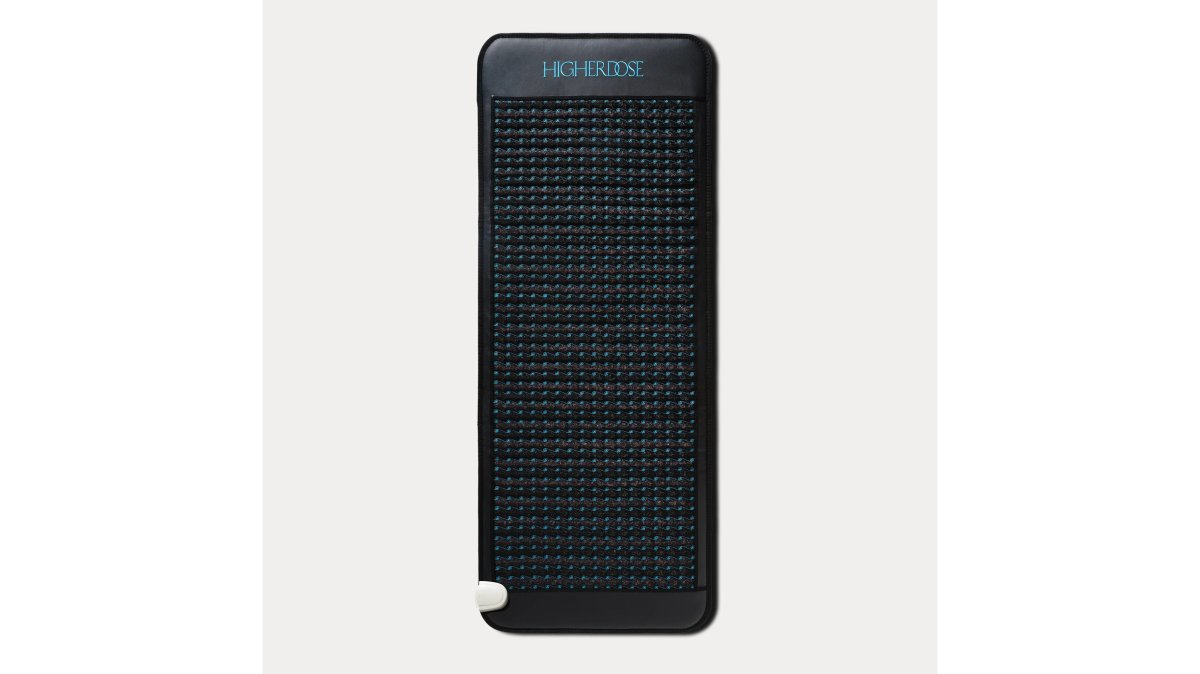
What sets it apart is coverage. A full-body mat means you're not repositioning a small pad every ten minutes to chase a sore spot. The trade-off is weight and footprint: at 45 lbs, this is not a device you'll tuck into a closet nightly.
Infrared PEMF Go Mat Review: Portable Relief for Small Spaces
The Infrared PEMF Go Mat answers the storage objection directly. At 39" x 19.5", it's sized for a work-from-home chair, a meditation cushion, or a small apartment floor, and it weighs a fraction of the Pro Mat.
It bundles a crystal layer that generates negative ions, a handheld remote, a storage bag, and a magnet tester, plus a 1-year limited warranty. Where it falls short is full-body coverage; this is a targeted device, best for lower back, shoulders, or grounding during seated work.
RED Light PEMF Infrared Heating Mat PRO Review: Multi-Modality Recovery
Three technologies in one mat: far-infrared heating (86 to 158°F), red light wavelengths, and PEMF, layered over natural gemstones including amethyst, jade, and red jasper. At 80 x 190 cm and 36.4 lbs, it's full-body sized but lighter than the Pro Mat.

The carrying bag makes it the most travel-friendly of the full-body options. If you want one device that covers heat, light, and magnetic field therapy, this is the most versatile pick in the lineup.
PEMF Mat for Pain Relief: What the Evidence Shows
A PEMF mat for pain relief is a home device that delivers pulsed electromagnetic fields to support comfort and mobility in targeted or full-body areas. The clinical literature on PEMF is most established in bone healing and musculoskeletal recovery, where researchers have studied pulsed fields for decades. To judge any device honestly, you need to separate the conditions with real regulatory and clinical footing from the general-wellness claims that dominate mat marketing.
Where the evidence is strongest
- Fracture non-union and bone healing. Pulsed electromagnetic field therapy has the deepest research history here, which is why it is the indication most often tied to cleared devices (pubmed.ncbi.nlm.nih.gov). This is the one area where the mechanism, field exposure influencing osteoblast activity and calcium deposition at the fracture site, is reasonably well described.
- Post-operative and chronic wound healing. Adjunctive PEMF has been studied alongside standard care, generally as a support rather than a replacement.
- Osteoarthritis and joint pain. Trials exist but vary widely in device, field strength, and duration, which is why results are mixed rather than conclusive.
- Muscle soreness, stiffness, and sleep. This is where most at-home mats are actually sold, and where the evidence is thinnest. User-reported comfort and relaxation are real, but they are not the same as a controlled clinical endpoint.
Why the studies disagree
The single biggest reason PEMF research looks inconsistent is that "PEMF" describes a delivery method, not a dose. Two studies can both say "PEMF" and use completely different frequencies, intensities, waveforms, and session lengths. A device pulsing at a few Gauss for 20 minutes is not the same intervention as a clinical unit running a tuned waveform for an hour. When you read a positive or negative study, check whether the parameters resemble the device you are considering, most review sites never make this comparison.
What this means for a mat buyer
- Match the claim to the indication. A mat marketed for "cellular recovery" is making a wellness claim, not a medical one, and should be evaluated on comfort, coverage, and build quality rather than clinical outcomes.
- Consistency beats intensity. A common pattern practitioners describe is that daily moderate sessions outperform occasional high-intensity ones, because the proposed benefit is cumulative rather than acute.
- Treat it as a complement. The strongest use case is stacking PEMF with physical therapy, stretching, or other recovery work, not replacing it.
How Long Should You Use a PEMF Mat?
Most manufacturers recommend sessions of 8 to 30 minutes, once or twice daily, depending on the device and your goals (pubmed.ncbi.nlm.nih.gov). How long should you use a PEMF mat is really a question of tolerance and routine: start at 10 minutes on a low setting and build from there.
Signs you're overdoing it include headache, lightheadedness, or unusual fatigue. Back off the duration and frequency if those appear. For relaxation and sleep support, evening sessions tend to fit best; for post-workout recovery, use the mat within an hour of finishing.
| Goal | Session Length | Frequency |
|---|---|---|
| General relaxation | 10-15 min | Once daily |
| Post-workout recovery | 15-20 min | After training |
| Chronic stiffness | 20-30 min | Once or twice daily |
FDA Cleared PEMF Devices: What Clearance Means for Your Purchase
FDA cleared PEMF devices have been reviewed by the U.S. Food and Drug Administration for a specific intended use, most commonly bone healing or pain management. Clearance is not the same as approval, and it applies to a defined indication, not to every claim a seller makes. Understanding that distinction is the difference between buying a device that does what you need and paying a premium for a label that does not apply to your use case.
Clearance vs. approval vs. registered, three different things
- 510(k) clearance. The manufacturer shows the device is substantially equivalent to a legally marketed predicate device. Most cleared PEMF devices go this route. It is a review of equivalence, not a fresh proof of effectiveness.
- De novo or PMA approval. A higher bar reserved for novel or high-risk devices. Far fewer PEMF products carry this.
- Establishment registration. A facility is registered with the agency. This says nothing about whether a specific product is cleared. Sellers sometimes blur registration into "FDA registered" to imply more than it means.
How to verify a claim in about two minutes
- Ask the seller for the clearance number (a K-number for 510(k)).
- Look up that number in the agency's public device database.
- Read the indications for use statement, this is the legally defined purpose, and it is narrower than the marketing copy.
- Confirm the cleared indication matches what you actually want the device for.
If a seller cannot produce a clearance number, treat "FDA cleared" as unverified.
FDA guidance on pulsed electromagnetic field devices
Why most at-home mats are not cleared
For wellness-focused mats sold for general comfort and relaxation, clearance often does not apply at all. That is not automatically a red flag, it simply means the product is being sold as a general wellness item rather than a medical device, and its claims should be read accordingly. The problem is when a seller borrows the credibility of the cleared category to sell a wellness product. The intended-use language is where that gap shows up.
The two questions to ask before buying
- What is this device cleared or intended for?
- Does that match what I actually need?
If the answer to the second is no, the clearance is irrelevant to your purchase, and you should be comparing coverage, field strength, session programming, and build quality instead.
Frequently Asked Questions
What should I look for when buying a PEMF mat?
Start with coverage: full-body mats suit daily recovery sessions, while smaller mats fit chairs and desks. Check the PEMF frequency and intensity controls, infrared heat range, and whether the device carries FDA clearance for its intended use. Weight and storage matter too, since a 45 lb mat is not easy to move. Also confirm warranty length and whether replacement parts are available, because a mat that cannot be serviced becomes an expensive floor covering.
How long should you use a PEMF mat each day?
Most at-home PEMF mats are used in sessions of 10 to 30 minutes, once or twice daily. Beginners often start at 10 to 15 minutes on a lower setting and extend the session as they get comfortable. Your device manual is the authority here, since pulse duration and intensity vary between models. Consistency matters more than length: a short daily session tends to be more useful than an occasional long one.
Are PEMF machines legit?
PEMF devices have a long history in clinical settings, and some are cleared by the FDA for specific uses such as bone healing and pain management. That clearance applies to particular devices and particular claims, not to every mat sold online. At-home mats are typically marketed for comfort, relaxation, and general wellness rather than disease treatment. If a seller promises a cure for arthritis or any other condition, treat that as a warning sign rather than a feature.
Can you get too much PEMF therapy?
Yes. More time on a mat is not automatically better, and exceeding the manufacturer's recommended session length can leave you feeling overstimulated or drained. People with pacemakers, implanted defibrillators, insulin pumps, or other electronic medical devices should not use PEMF without written approval from their doctor, because magnetic fields can interfere with implanted electronics. Pregnant individuals should also consult a physician first.
How does PEMF therapy compare to other recovery modalities?
PEMF works differently from cold plunges, infrared saunas, and massage guns. Cold plunge targets inflammation and circulation through cold exposure; infrared saunas raise core temperature and promote sweating; PEMF delivers pulsed electromagnetic fields intended to support cellular recovery. Many home users stack two or three: a PEMF session after training, a sauna in the evening, and a cold plunge on high-soreness days. The combination covers more recovery pathways than any single tool.
Choosing an advanced PEMF device comes down to matching coverage and routine to your space and goals, not chasing the longest feature list. Essential Life Vitality carries the Infrared PEMF Pro Mat, the portable Infrared PEMF Go Mat, and the multi-modality RED Light PEMF Infrared Heating Mat PRO, each backed by detailed specifications and a support team reachable by phone, email, or live chat. Get started with Essential Life Vitality and build a recovery routine that fits your home.