

Table of Contents
- Best Portable Infrared Sauna Options: Quick Comparison
- How We Selected These Portable Infrared Sauna Options
- Flex Lie Down Sauna: Best for Full-Body Relaxation
- Silver Elite Sauna: Best Value for Daily Wellness
- Black Pro Sauna: Best for Frequent, Heavy Use
- Wooden Sauna Rooms: Premium Stationary Alternatives
- Infrared Sauna vs Traditional Sauna: Key Differences
- Low-EMF Portable Sauna Benefits and Safety
- Frequently Asked Questions
Last Updated: September 8, 2026
Shopping for the best portable infrared sauna options means balancing heat technology, EMF safety, and how much space you actually have. A portable infrared sauna uses infrared heaters to warm your body directly rather than heating the air around you, which allows for a deeper sweat at lower ambient temperatures. In this guide from Essential Life Vitality, we break down the top configurations we sell, from lie-down tents to solid wood cabins, so you can match a unit to your routine.
Below, we'll show you exactly which model fits full-body relaxation, daily family use, and heavy frequent sessions. We also cover the key differences between infrared and traditional steam saunas, plus what low-EMF ratings actually mean for your safety.
Best Portable Infrared Sauna Options: Quick Comparison
A portable infrared sauna is a self-contained heat therapy unit that uses infrared panels to penetrate tissue directly, making it a popular choice for muscle recovery and detoxification at home. Most people choose between a collapsible tent sauna, which stores away easily, or a permanent wooden cabin that becomes a fixture in a spare room or garage.
Here is how our core lineup stacks up against each other:
| Model | Price | Best For | Key Feature |
|---|---|---|---|
| Flex Lie Down Sauna | $1,700 | Full-body relaxation | Reflective mat, horizontal design |
| Silver Elite Sauna | $1,700 | Daily personal/family use | Durable fabric tent, standard heat retention |
| Black Pro Sauna | $2,300 | Frequent, heavy use | Reinforced lining, faster heat-up |
| Maison Single-Person Room | $1,999.97 | Spa-like atmosphere | Wood construction, Bluetooth, ambient light |
| 1-Person Low EMF Hemlock Sauna | $1,087.98 | Budget-conscious buyers | Graphene plates, starry ceiling lights |
How We Selected These Portable Infrared Sauna Options
We evaluated every unit on four criteria: heat delivery, EMF output, material quality, and how the design fits into a weekly wellness routine. A common mistake is buying purely on price without checking whether the heating panels actually surround your body evenly.

For tent models, we prioritized units with reflective interior linings because they amplify far infrared frequency and improve heat retention. For wooden cabins, we focused on hemlock construction and low EMF carbon heaters, since those materials resist warping and emit less electromagnetic field radiation than cheaper alternatives.
Flex Lie Down Sauna: Best for Full-Body Relaxation
The Flex Lie Down Sauna is our top pick for anyone who wants to stretch out completely during a session. Unlike seated tents that force you into a curled position, this unit delivers deep penetrating far infrared frequency across your entire body while you lie flat, amplified by a reflective mat underneath you.
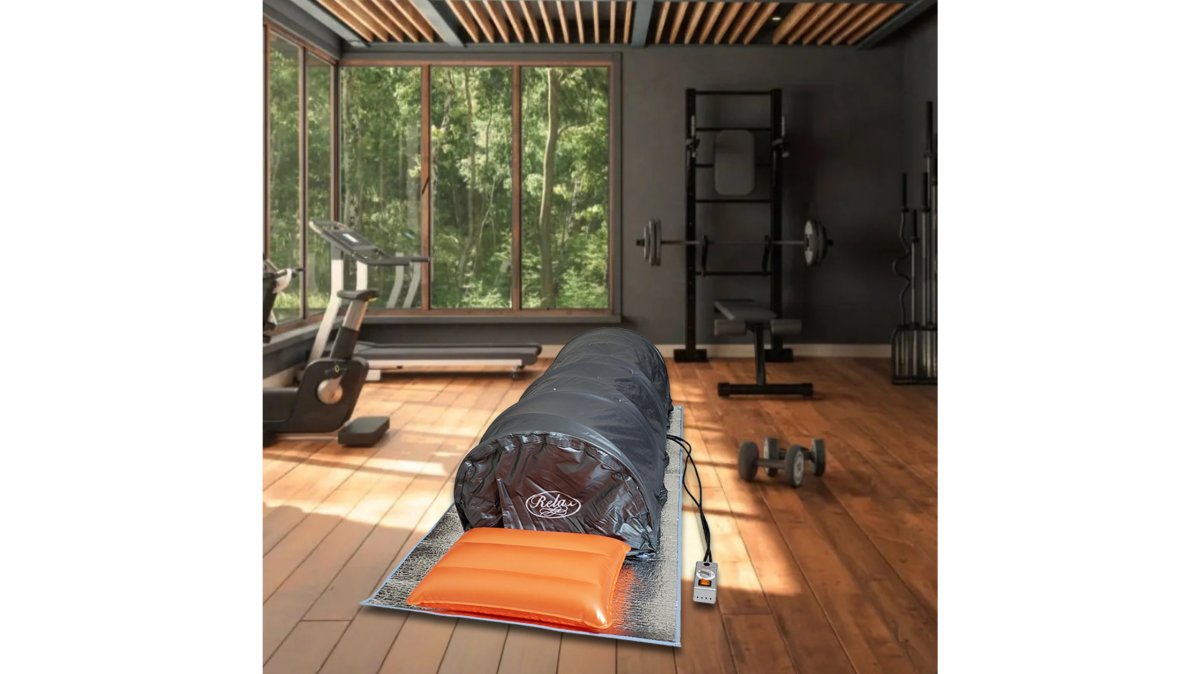
The horizontal design promotes better circulation because your legs are elevated and unrestricted. It supports detoxification, muscle recovery, and calorie burning, making it a strong fit for athletes recovering after long training days. At $1,700, it matches the Silver Elite in price but offers a distinct advantage for full-body coverage.

What most guides miss is that lying down changes how your cardiovascular system responds to heat stress. Being horizontal reduces the orthostatic load on your heart compared to sitting upright, which many users find more comfortable for longer session durations.
Silver Elite Sauna: Best Value for Daily Wellness
The Silver Elite Sauna is a great option for individuals or families who plan to use their sauna consistently. It uses a dual FIR conductor system, meaning the core heating elements and infrared output are designed for effective heat delivery.
Its highly durable fabric tent reflects far infrared energy effectively, though it retains less heat than the Black Pro model. For most home users, extending a session by a few minutes can help achieve desired sweat production. It weighs 32 lbs, making it manageable to move between rooms or store in a closet.

The Silver Elite is engineered for long-term personal and family use. If you are building a disciplined wellness routine without a dedicated sauna room, this unit offers performance at an accessible price point.
Black Pro Sauna: Best for Frequent, Heavy Use
The Black Pro Sauna is an upgrade choice for heavy users. It features an upgraded, thicker, and more reinforced tent material lined with silver on the inside for enhanced reflectivity and heat retention.
That insulation contributes to faster warm-up times and heat intensity. Because it holds heat well, it can be efficient for those with busy schedules. The unit weighs 34 lbs, slightly heavier than the Silver Elite due to the reinforced fabric.
At $2,300, the Black Pro is priced higher than the Silver Elite. This difference reflects its features, including enhanced durability.
Wooden Sauna Rooms: Premium Stationary Alternatives
If you have the floor space and want a permanent fixture, wooden sauna rooms offer superior insulation and a more authentic spa experience. These units do not fold away, so they are best for homeowners with a dedicated wellness area in a basement, garage, or spare bedroom.
Maison Single-Person Sauna Room
The Maison Single-Person Infrared Sauna Room brings a spa-like atmosphere into your home with natural wood construction and six heating plates. It includes a Bluetooth music player and customizable ambient lighting, turning each session into a full sensory retreat. At $1,999.97, it offers consistent warmth.
1-Person Low EMF Hemlock Sauna with Starry Lights
This compact cabin is an affordable wooden option at $1,087.98. It uses heating plates that reach your desired temperature, with a maximum temperature of 149°F. The starry ceiling lights and built-in speaker system add an entertainment element, while features like dry-boil protection and automatic power-off enhance safety.
Infrared Sauna vs Traditional Sauna: Key Differences
The main difference between an infrared sauna and a traditional sauna comes down to how heat reaches your body. Traditional saunas heat the air around you to high temperatures, often between 150°F and 195°F, using hot rocks or steam. Infrared saunas warm your body directly at lower ambient temperatures, typically between 120°F and 140°F (the NIH).
That lower air temperature makes infrared sessions more comfortable for people who find traditional saunas oppressive. Far-infrared waves penetrate up to 1.5 inches deep into muscles, delivering mild warming energy that supports blood circulation and muscle recovery without the suffocating humidity of a steam room (PubMed).
Infrared saunas can heat up efficiently. For daily home use, the efficiency of infrared heating can be a practical choice for many.
Low-EMF Portable Sauna Benefits and Safety
Low-EMF portable sauna benefits extend beyond comfort into long-term safety. EMF, or electromagnetic field, is measured in milligauss (mG), and some budget saunas emit levels that health-conscious users find concerning. Low-EMF models are designed to keep emissions minimal, typically using carbon fiber or graphene heating panels that produce less electromagnetic radiation than ceramic heaters.
When evaluating a portable infrared sauna, look for the EMF rating in the specifications. High-quality units, such as the Full Spectrum Infrared Sauna with red light therapy, maintain low EMF levels between 1.4 and 2.6 mG. That unit also includes 660nm and 850nm red light, which operates at lower wavelengths to support skin appearance and cellular function.
For safety, always stay hydrated during sessions and keep a water bottle nearby. Infrared saunas induce significant sweat production, and proper hydration supports your body's natural detoxification process. Most wooden cabin models include a cup holder and ventilation windows for this reason.
Frequently Asked Questions
Are portable infrared saunas worth it?
Yes, for many people. A portable infrared sauna delivers heat therapy, muscle recovery support, and relaxation at home. Units like the Silver Elite cost around $1,700. They can also fold away when not in use, making them practical for apartments. Choosing a low-EMF model and using it consistently can help you achieve desired results.
What is the downside to an infrared sauna?
The main downsides are the initial cost, which runs from about $1,087 to over $3,000 depending on the model, and the space needed even for portable versions. Tent-style units need floor space during use. They also typically require a dedicated 110V outlet and a pre-heat time before each session. Compared to a traditional sauna, they heat at lower air temperatures, which some users find less intense at first.
How long should a typical session in a portable infrared sauna last?
Start with 10 to 15 minute sessions, 2 to 3 times per week. As your body adapts, you can work up to 30 to 45 minutes per session, up to 4 times weekly. The Black Pro Sauna, with its reinforced insulation, can be efficient for those seeking effective sessions. Always listen to your body: if you feel dizzy or lightheaded, end the session and hydrate. Drink water before and after each use to replace fluids lost through sweat.
Do portable infrared saunas emit high levels of EMF?
Quality portable saunas are designed with low-EMF heating elements to minimize electromagnetic field exposure. Look for models that specify low-EMF carbon fiber or graphene heating panels. For example, the Full Spectrum Infrared Sauna with red light therapy reports EMF levels between 1.4 and 2.6 mG. Avoid units that do not publish EMF ratings. If you are sensitive to EMF, choosing a model with verified low readings and asking the manufacturer for documentation can be helpful.
What is the difference between near-infrared and far-infrared portable saunas?
Far-infrared is the most common type in portable saunas. It penetrates about 1.5 inches into the body to warm muscles directly, which supports recovery and produces deep sweating at lower air temperatures. Near-infrared operates at shorter wavelengths and is often paired with red light therapy for skin health. Some premium units, like the Full Spectrum Infrared Sauna, combine far-infrared heat with 660nm and 850nm red light so you get both muscle-level warmth and skin-level therapy in one session.