

Table of Contents
- Cold Plunge Worth the Cost: What the Research Shows
- Comparing Cold Plunge Costs: Entry-Level vs. Premium Systems
- Cold Plunge Maintenance Costs: The Real Ongoing Expenses
- How Long Should You Cold Plunge to See Results?
- Best Portable Cold Plunge Systems for Home Use
- Cost Per Use Analysis: Is the Investment Justified?
- Conclusion: Is a Cold Plunge Worth It for You?
- Frequently Asked Questions
Last Updated: September 9, 2026
Deciding whether a cold plunge is worth the cost comes down to one question: will you actually use it enough to justify the price? This analysis from Essential Life Vitality breaks down the real costs of ownership, from the sticker price to the ongoing maintenance, so you can decide if the investment makes sense for your lifestyle.
Many people assume the only cost is the tub itself, but maintenance, electricity, and water treatment add up over time. For those weighing the cold plunge worth question, the answer often hinges on comparing the cost per use against the price of gym memberships or dedicated cold therapy studios.
Cold Plunge Worth the Cost: What the Research Shows
The therapeutic benefits of cold water immersion are well documented, with regular use linked to reduced muscle soreness, improved mental resilience, and a boost in dopamine release that supports mood and focus (PubMed).
The real determinant of whether a cold plunge is worth the cost is psychological habit formation, not the physiological response. A unit that is difficult to fill, clean, or access will sit unused, turning a premium investment into an expensive storage container.
Comparing Cold Plunge Costs: Entry-Level vs. Premium Systems
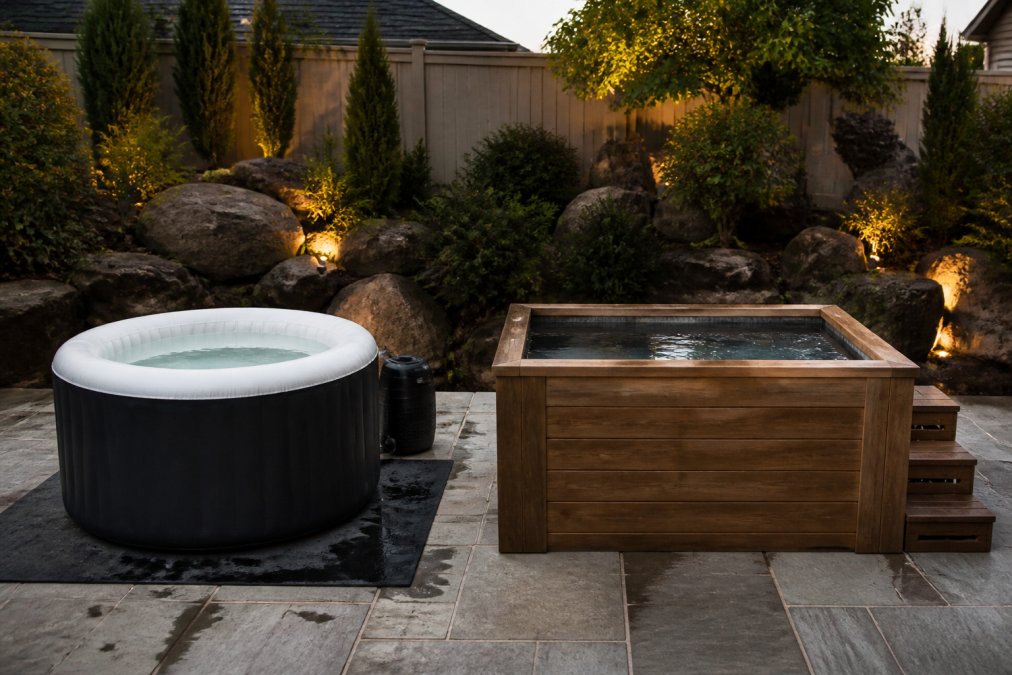
Cold plunge costs span a wide range, and the differences go far beyond the tub's appearance. Entry-level kits typically use inflatable construction with a separate chiller unit, while premium models feature rigid fiberglass or wood-clad designs with integrated temperature control.
| Model | Price | Capacity | Key Feature | Best For |
|---|---|---|---|---|
| FCP Premium 2XL 148 Gal Kit | $999.97 | 148 gallons | 7-layer insulation, 1/3 HP chiller | Budget-conscious full immersion |
| FCP Premium XL 120 Gal Kit | $1,099.97 | 120 gallons | 5-layer insulation, portable | First-time buyers |
| FCP Premium XL 1HP Kit | $1,999.97 | 120 gallons | 1HP chiller, faster cooling | Warmer climates |
| Premium ThermoWood Tub | $5,999.97 | 1-person | No electricity required | Off-grid aesthetics |
| Icetubs IceBarrel XL | $12,599.97 | 1-person XL | Heating and cooling, app control | Premium dual-use spa |
FCP Premium 2XL 148 Gal Kit: The Budget-Friendly Option
For those asking if a cold plunge is worth the cost at the entry level, the FCP Premium 2XL 148 Gal Kit at $999.97 offers the most generous interior volume for the price. The spacious oval design allows for full-body immersion and includes a 1/3 HP chiller, filter, and pump, along with an insulated cover that reduces energy consumption between sessions.

The tradeoff is the inflatable construction, which requires careful handling and a flat, protected surface to avoid punctures. It is best suited for a garage, patio, or basement where it won't be moved frequently.
FCP Premium XL 120 Gal Kit with 1HP Chiller: Mid-Range Value
Stepping up to the $1,999.97 FCP Premium XL 120 Gal Kit with the 1HP chiller addresses the entry-level model's main limitation: cooling speed, bringing water to temperature faster and holding it more effectively in warmer conditions.
This kit also includes caster wheels for easier repositioning. The 5-layer insulation and upgraded hoses minimize heat loss, directly impacting monthly energy consumption. For most home users, this mid-range option represents the best balance of performance and cost.
Premium 1-Person ThermoWood Tub: The No-Electricity Choice
The Premium 1-Person ThermoWood Tub at $5,999.97 is a different category of investment. This tub uses no electricity, making it an eco-friendly option for off-grid setups or those avoiding ongoing energy costs.
The absence of a chiller means sourcing ice or relying on cold ambient temperatures, a significant operational consideration. This model is best for dedicated enthusiasts with a reliable ice source or consistently cool climates.
Icetubs IceBarrel XL: The Premium Investment
At the top of the range, the Icetubs IceBarrel XL at $12,599.97 offers the most versatile experience, cooling to 37.4°F and heating to 100.4°F via a smartphone app. This flexibility allows it to function as both a cold plunge and a warm soak, increasing frequency of use.
The advanced three-stage filtration system with a built-in ozonator keeps water clean without harsh chemicals, reducing maintenance to periodic filter changes. The compact footprint fits into a variety of spaces. For affluent homeowners building a wellness sanctuary, the IceBarrel XL is a complete solution.
Cold Plunge Maintenance Costs: The Real Ongoing Expenses
Most reviews stop at the sticker price, but the true cost of ownership is a 3- to 5-year equation. To answer "is a cold plunge worth the cost" honestly, you have to calculate the ongoing operational expenses, which can add 20-40% to the total investment over the unit's lifespan.
The Three Recurring Cost Centers
1. Electricity for the Chiller
This is the largest variable. A 1/3 HP chiller draws roughly 300-400 watts, while a 1 HP unit draws closer to 750-900 watts. In a temperate climate, a well-insulated tub with a cover will cycle on for about 6-8 hours per day to maintain 45°F. At the U.S. average rate of $0.17 per kWh, that translates to roughly $11 to $17 per month for a 1/3 HP unit, or $25 to $35 per month for a 1 HP unit in a warmer climate.
2. Water and Sanitation
Depending on municipal water rates, filling a 120-gallon tub costs between $1.50 and $3.00. If you change the water every 4-6 weeks, that is roughly $15 to $30 per year. The bigger recurring cost is sanitation. Units without a UV or ozone filtration system require chemical treatments, typically a non-chlorine shock or bromine, costing $15 to $25 per month. Units with built-in ozonators (like the IceBarrel XL) reduce chemical needs to near zero but add $300 to $500 to the upfront price.
3. Filter Cartridges and Consumables
Filter cartridges need replacement every 2-4 weeks depending on usage. At $15 to $25 per cartridge, that is $180 to $300 per year. Some systems use reusable, cleanable filters, lowering this cost to near zero but increasing labor time.
The 3-Year Cost of Ownership Model
To put this in perspective, here is a realistic 3-year total cost projection for the two most popular setups:
| Cost Center | FCP Premium 2XL (Entry-Level) | Icetubs IceBarrel XL (Premium) |
|---|---|---|
| Purchase Price | $999.97 | $12,599.97 |
| Electricity (3 yrs) | $400 | $900 |
| Water Changes (3 yrs) | $60 | $60 |
| Chemicals (3 yrs) | $540 | $0 (ozonator) |
| Filter Cartridges (3 yrs) | $600 | $300 |
| Total 3-Year Cost | $2,599.97 | $13,859.97 |
This model reveals the hidden truth: the entry-level unit's total cost is 2.6x its sticker price, while the premium unit's is only 1.1x. The real differentiator is the efficiency of the filtration system and the quality of the insulation.

The Hidden Cost of Poor Insulation
Insulation quality is the single biggest factor in your monthly electric bill. A tub with 5-layer insulation and a sealed cover will lose less than 1°F per hour in 60°F ambient air. A cheaper inflatable tub with thinner walls may lose 3-4°F per hour, forcing the chiller to run nearly twice as long. Over a year, that difference can add $150 to $250 in unnecessary electricity costs.
The Water Change Labor Cost
There is also a labor component rarely priced. Draining and refilling a 120-gallon tub takes 45-60 minutes of active time, plus 12-24 hours for the chiller to bring fresh water down to temperature. At $25 per hour, each water change costs $25-$50 in labor. Systems with better filtration (UV, ozone, or cartridge-based) extend time between changes to 8-12 weeks, cutting this labor cost by two-thirds.
Why This Analysis Changes the "Worth It" Calculation
Most articles conclude that a $2,000 tub used 5x per week costs $2.56 per session. But that math ignores the $1,500+ in operational costs over 3 years. The accurate cost-per-use is closer to $4.50 per session. That is still cheaper than a $30 cold plunge studio session, but it is not the bargain the surface-level math suggests.
This rigorous financial lens is the missing piece in most "is it worth it" discussions. The answer is not just about whether you will use it, it is about whether the total cost of ownership, including electricity, chemicals, filters, and your time, still beats the alternatives.
How Long Should You Cold Plunge to See Results?
The ideal cold plunge duration for most people is between 2 and 5 minutes per session, enough to trigger the cold shock response and deliver therapeutic benefits (the CDC). Beginners should start with 30 to 60 seconds to let the body adapt, then gradually increase the time over several weeks.
Consistency matters more than duration. A daily 2-minute plunge is generally more effective for building mental resilience and supporting recovery than a single 20-minute session once a week. Mental clarity and stress management benefits may become noticeable after two to three weeks of regular use.
Best Portable Cold Plunge Systems for Home Use
Portable systems are the most practical entry point for home cold therapy, but the decision involves more than picking a tub. The hidden factors, electrical load, floor weight capacity, and clearance space, determine whether a system will actually work in your home.
The Infrastructure Reality Check
Before you buy any portable system, run through this checklist:
1. Electrical Load and Circuit Requirements
Every chiller unit requires a dedicated circuit. A 1/3 HP chiller draws about 3.5 amps at 115V, while a 1 HP chiller draws closer to 8 amps. Plugging a 1 HP chiller into a circuit shared with a refrigerator risks tripping the breaker mid-cooling cycle. Most electricians recommend a dedicated 15-amp circuit for any chiller above 1/2 HP. If your outlet is on a shared circuit, budget $200-$400 for an electrician to run a dedicated line.
2. Floor Weight Capacity
A 120-gallon tub filled with water weighs approximately 1,000 pounds (water weighs 8.34 lbs per gallon). Add the tub itself (50-80 lbs for inflatable models) and one person (150-200 lbs), and you are looking at 1,200-1,300 pounds of concentrated load. Standard residential floors are designed to handle 40 pounds per square foot of live load (hud.gov). A 120-gallon tub with a footprint of roughly 6 feet by 2.5 feet (15 square feet) distributes about 80 pounds per square foot, double the standard rating. Concrete slabs handle this easily; elevated wooden decks may require reinforcement.
3. Plumbing and Drainage Access
Every portable system needs a way to drain. Most use a garden hose attachment that relies on gravity or a small pump. If your planned location is not near a floor drain or an exterior spigot, you will need to run a 50-foot drain hose to a suitable outlet. Consider a location within 25 feet of a drain point to keep the monthly water change manageable.
The Best Portable Systems by Use Case
With those constraints in mind, here is how the leading portable options stack up for different home situations:
For the Garage or Basement (Concrete Floor): The FCP Premium 2XL 148 Gal Kit ($999.97)
This is the best value for anyone with a concrete floor and a dedicated outlet. The 148-gallon capacity allows full immersion for taller individuals, and the 7-layer insulation helps keep energy costs down. The inflatable walls require a puncture-resistant mat underneath, a $30-$50 investment in a rubber stall mat from a farm supply store. The 1/3 HP chiller is adequate for maintaining 45-50°F in a garage that stays below 80°F.
For the Patio or Deck (Outdoor Use): The FCP Premium XL 120 Gal Kit with 1HP Chiller ($1,999.97)
If your plunge will live outdoors, the 1 HP chiller is not a luxury, it is a necessity. In direct sunlight or ambient temperatures above 85°F, a 1/3 HP chiller can take 12+ hours to reach 45°F, while a 1 HP unit does it in 4-6 hours. This model includes caster wheels, essential for repositioning the unit for cleaning or seasonal storage.
For the Apartment or Small Space: No Portable System Is Ideal
A 120-gallon tub requires a minimum footprint of 6 feet by 3 feet for the tub and chiller combined, plus 2 feet of clearance on all sides for access and maintenance. That is roughly 40 square feet of dedicated space. Many apartments may not have the floor weight capacity or the drainage access to support a filled tub.
The Setup Timeline: What to Expect
A realistic setup timeline for a portable system is 3-4 hours from unboxing to first plunge. This includes: 45 minutes for unboxing and layout, 60 minutes for connecting the chiller, pump, and hoses, 30 minutes for filling with a standard garden hose (at 10 gallons per minute, a 120-gallon fill takes 12 minutes, but the chiller needs 4-6 hours to reach temperature), and 30 minutes for testing and leak checks.
Why This Section Matters for the "Worth It" Calculation
The cost of infrastructure is rarely included in the purchase price comparison. A $1,999.97 tub can easily require $400 in electrical work, $50 in floor protection, and $100 in hoses and fittings, bringing the true entry cost to $2,550. That is a 27% increase over the advertised price. When you ask "is a cold plunge worth the cost," the answer must include these hidden setup expenses.
Cost Per Use Analysis: Is the Investment Justified?
The most honest way to evaluate whether a cold plunge is worth the cost is to calculate the cost per use over the expected lifespan of the unit. A $1,999.97 system used 5 times per week for 3 years, roughly 780 sessions, works out to about $2.56 per plunge before accounting for electricity and water treatment.
Compare that against the monthly fee for a cold therapy studio or a premium gym with plunge access, and the math often favors home ownership for regular users. The resale value of well-maintained units, particularly the wood-clad models, also offsets the total cost of ownership.
Conclusion: Is a Cold Plunge Worth It for You?
A cold plunge is worth the cost if you will use it consistently enough to bring the cost per session below what you would pay elsewhere, and if you have the space and infrastructure to support it. The systems we carry at Essential Life Vitality are selected for durability and ease of use, from the FCP kits to the Icetubs IceBarrel XL.

Get started with Essential Life Vitality and build a recovery routine that supports your body's natural healing process. SHOP NOW.
Frequently Asked Questions
Are cold plunges actually worth the investment compared to DIY ice baths?
Cold plunge systems cost between $999 and $12,599 upfront, while DIY ice baths cost roughly $50 to $100 per week in ice alone. A chiller-equipped system pays for itself within 1 to 2 years if you plunge 4 times weekly. Beyond the math, chiller systems maintain consistent temperatures between 37-50°F without daily ice runs, which means you are more likely to stick with the habit long term.
How long should you cold plunge to see results?
Beginners should start with 30 to 60 seconds and gradually increase duration as cold tolerance builds. Consistency matters more than duration. Sessions beyond 10 minutes offer diminishing returns and increase the risk of cold shock response.
What are the hidden costs of owning a home cold plunge system?
Beyond the purchase price, budget for electricity to run the chiller, which adds roughly $15 to $40 monthly depending on your local rates and ambient temperature. Filter replacements cost $20 to $60 every 2 to 6 weeks depending on usage. Water treatment supplies like ozone generators or sanitizers add $10 to $30 monthly. Factor in water replacement every 1 to 3 months, which costs $5 to $15 depending on your tub's gallon capacity.
Are there significant safety risks associated with daily cold plunging?
Daily cold plunging carries real risks, especially for people with cardiovascular conditions. The cold shock response can spike heart rate and blood pressure dangerously, so anyone with hypertension or heart disease should consult a physician first. Limit sessions to 5 minutes or less, never plunge alone, and avoid alcohol beforehand. Hypothermia becomes a genuine risk with extended sessions below 50°F, so use a timer and exit immediately if you feel numbness or confusion.